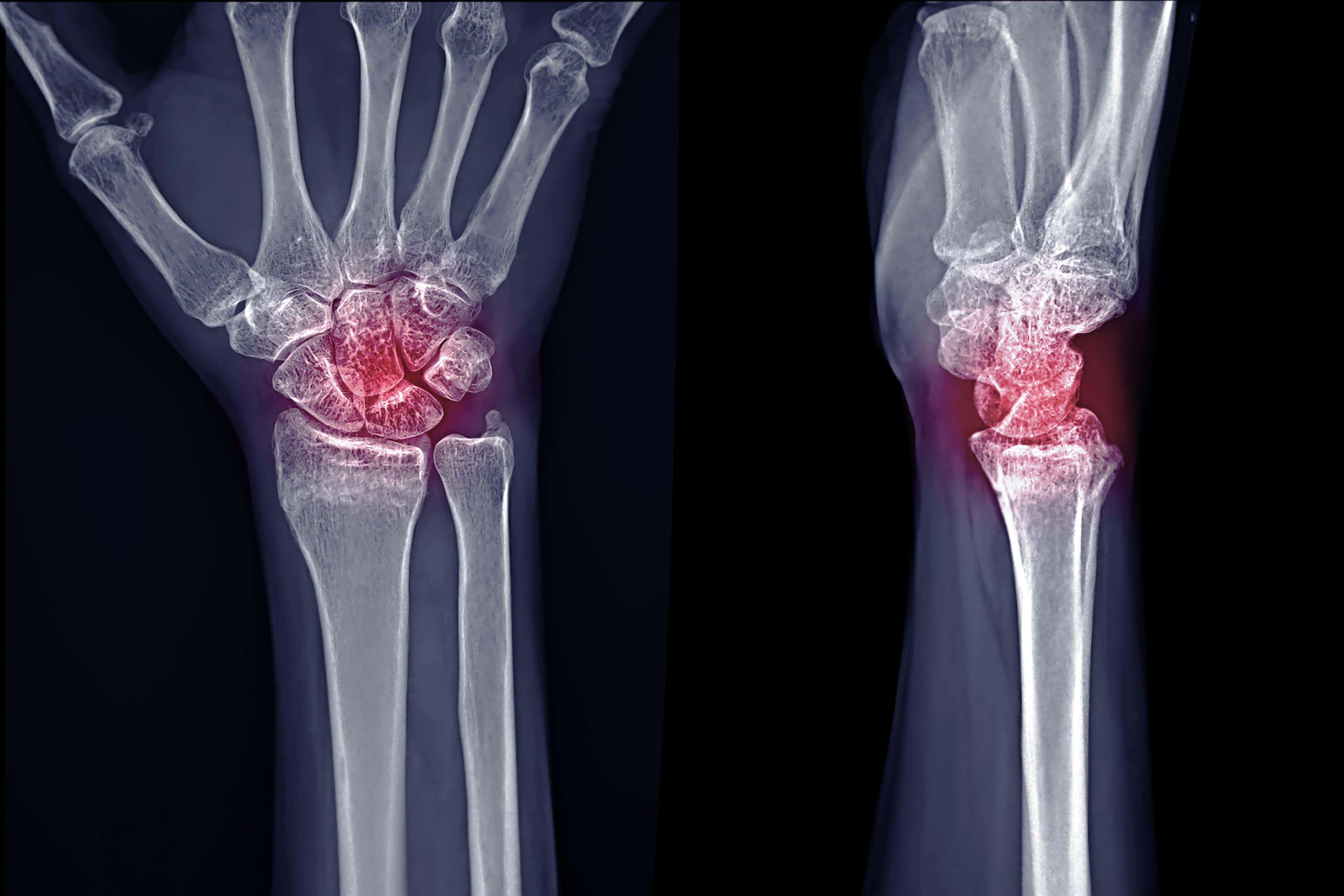
Friday, 22 September 2023

Post-Traumatic Arthritis: Osteoarthritis After an Injury

From verywellhealth.com

Early treatment helps prevent chronic symptoms

Post-traumatic arthritis (PTA), or post-traumatic osteoarthritis (PTOA), is caused by injury or accident triggering cartilage bruising and joint inflammation. In severe cases, it can also tear the cartilage from bone resulting in cartilage loss and eventual joint degeneration. It is also known as secondary osteoarthritis (OA) because it is has a secondary cause and is not associated with aging and wear-and-tear on the joints. Post-traumatic arthritis causes pain and even temporary disability, but there are ways of managing.

This article will explain how PTA affects you, as well as its causes, treatment options, and ways to manage it.

 Post-Traumatic Arthritis in the Knee

The good news is post-traumatic arthritis caused by accident or injury typically is temporary, lasting a few months or so. It is different from primary osteoarthritis (OA), which is a chronic condition and the most common form of arthritis.

Prevalence

Post-traumatic arthritis is the cause of an estimated 12% of all cases of osteoarthritis.

PTA can affect any joint that has been injured or experienced a physical trauma. However, osteoarthritis is generally associated with common body parts, including:

  • Knees
  • Hips
  • Shoulders
  • Wrist

Types of Sports and Accidents 

Studies have shown that sports injuries are risk factors for developing osteoarthritis later in life, but they can also be triggers for developing PTA immediately after injury, too.

High-contact sports, or highly physical sports in which contact injuries are likely to occur, cause the most  injuries or accidents leading to PTA injuries or accidents leading to PTA.

These include:

  • Football
  • Soccer
  • Hockey
  • Lacrosse
  • Rugby

Certain injuries are also associated with PTA, which include fractures, cartilage damage, acute ligament sprain, and chronic joint ligament instability. Experts say the most frequent clinically significant injuries are in the anterior cruciate ligament (ACL), the menisci, and the hyaline cartilage.

Examples include:

  • ACL tear (knee): A tear or sprain in the connective tissue linking your femur (thigh bone) and tibia (shinbone)
  • An acute meniscal tear: Knee injury often caused by pivoting
  • Intra-articular fractures: Breaks in bones that cross a joint

Unlike osteoarthritis, which develops over years, PTA will have acute or sudden signs and symptoms. These may appear right away or in the months right after injury. These will tell you whether or not you should speak to a healthcare provider about PTA.

Signs and symptoms of acute post-traumatic arthritis:

Post-traumatic arthritis may also involve internal bleeding due to a high-impact injury. It's important to consult a healthcare provider for a physical exam following a sports injury or accident. They can provide diagnosis and next steps for your situation to reduce inflammation, pain, and, if necessary, bleeding.

This type of osteoarthritis is typically temporary, but it isn't reversible and there is still good reason to seek treatment for PTA. The goal of PTA treatment is to minimize symptoms including inflammation and swelling contributing to pain and loss of joint mobility and function.

Early Treatment Benefits

Early and localized treatment may be an effective way to reduce likelihood of developing chronic PTA after direct joint trauma.

Chronic PTA is when symptoms of post-traumatic arthritis persist or last for six months or more. The transition from a temporary to a permanent condition is linked to severe inflammation. Managing chronic post-traumatic arthritis will involve treating the inflammatory mechanisms causing pain.

Medications for treating pain or inflammation

Many options exist for managing chronic pain. Finding what works best to reduce inflammation and pain may take some trial and error. The following are common options for treating osteoarthritis pain.

  • Analgesics (pain relievers) such as over-the-counter (OTC) Tylenol (acetaminophen) or prescription opioids
  • Nonsteroidal anti-inflammatory medications (NSAIDs) such as aspirin (acetylsalicylic acid), Advil (ibuprofen), Naprosyn (naproxen), and Celebrex (celecoxib) available OTC or in prescription-strength options
  • Corticosteroids or prescription steroidal anti-inflammatories in oral or injection options
  • Natural counterirritants such as capsaicin, menthol, or lidocaine that irritate nerve endings to change the sensation to cold, hot, or itchy and redirect your mind away from the pain

In addition to medication and following any specific treatment recommendations from your doctor or rheumatologist (arthritis specialist), experts suggest managing osteoarthritis of all kinds with exercise and assistive devices that can help support your joint strength, mobility, functioning, and overall health.

Examples include:

  • Exercise that includes a mix of strength-training, range of motion exercises, cardio or aerobic activities, and balancing exercises
  • Weight loss, if necessary, to remove excess pressure on joints
  • Physical therapy and assistive devices like braces for reducing pressure on joints where necessary

Complementary Therapies for Pain

You may need more than one treatment for pain, including at-home complementary therapies for post-traumatic arthritis. According to the National Centre for Complementary and Integrative Health (NCCIH), a growing body of evidence supports the following therapies’ use for short- or long-term pain management:

Surgery

Surgery for PTA may be needed in severe cases that cause persistent symptoms that interfere with quality of life. Surgical options include:

  • Joint fusion, when a plate and screws hold the joint together
  • Joint replacement surgery (arthroplasty), when an artificial joint replaces the damaged one

Post-traumatic arthritis is a secondary type of osteoarthritis caused by direct joint trauma or injury and accident. Symptoms can start right away or emerge in the months after injury. The condition usually is temporary, although symptoms lasting longer than six months indicate it has become a chronic condition. Repetitive and high-impact, high-contact sports are associated with developing osteoarthritis or experiencing post-traumatic arthritis.

Treatment is geared toward reducing physical trauma and inflammation and preventing chronic symptoms. Options include OTC and prescription medications, lifestyle modifications that include a range of exercises, assistive devices where necessary, and complementary therapies.

https://www.verywellhealth.com/post-traumatic-arthritis-7853503 

Friday, 15 September 2023

Arthritis 'pain triggers' include two common fruits as diet may impact incurable condition

From dailyrecord.co.uk

Research suggests that axing certain foods may 'eliminate' arthritis pain

Arthritis is a painful condition that affects over 300,000 Scots - and eating certain foods may make it worse.

According to the NHS, rheumatoid arthritis causes swelling and inflammation in the joints and while it's commonly associated in older people, it can be seen at any age. It currently has no cure but like many health conditions, there are certain things people can do to manage the condition - including watching what you eat.

In fact, experts have warned certain foods can act as "pain triggers" and spur bouts of swelling. According a report compiled by the Physicians Committee, apples and tomatoes are two fruits that are "common" for prompting arthritis pain - thanks to one shared ingredient.

It states that while genetic factors play a role in developing arthritis, lifestyle factors are also influential, adding that making diet changes could help "eliminate" arthritis pain "entirely" in sufferers.

As reported by the Mirror, the report explained: "In research studies, many people who cut out certain trigger foods find that their pain improves or goes away. When those foods are gone, so is the inflammation.

"A survey of more than 1,000 arthritis patients revealed that red meat, sugar, fat, salt, caffeine, and nightshade plants most commonly worsen the condition.”

Rheumatoid arthritis causes painful inflammation in the joints 

It read: “Solanine is a toxic compound produced in nightshades family such as potato, tomato and eggplant when exposed to light. The current study was carried out on 18 female postmenopausal albino rats to investigate the effect of solanine on the symptoms of rheumatoid arthritis.

"The data of the present study showed that old age and postmenopausal suffering from arthritis and joint swelling must eliminate or avoid the nightshades plants to alleviate the joint pain and also decrease the destruction of the tissues.”

However, this claim has been questioned by other health bodies. The Arthritis Society Canada recommended seeing how your body reacts to foods containing solanine.

Meanwhile, last month researchers found medication controlling blood sugar levels in type 2 diabetes can also help patients with certain autoimmune diseases . The drug, Canagliflozin, also targets T-cells – a type of white blood cell that usually helps us fight infections.

These cells are known to mistakenly attack healthy tissues in patients with autoimmune diseases. Therefore, using Canagliflozin to inhibit them could aid the more than 400,000 people in the UK with rheumatoid arthritis and the 50,000 living with lupus.

https://www.dailyrecord.co.uk/lifestyle/arthritis-pain-triggers-include-two-30937763


Wednesday, 13 September 2023

New technology helps arthritis patients walk again

From winknews.com

The simple act of walking can be a real struggle for someone with ankle arthritis, but many people are slow to consider a surgical option to relieve their pain.

Up until now, a fusion, which limits mobility, was the go-to surgery. However, that could change, thanks to new technology.

The truth is that a lot is riding on our ankles. Yolanda Ocampo learned that after shattering her ankle in a car crash. Her first surgery in 2020 fixed the bones, but two years later, the pain was still so crippling she hardly left her house.

“It still hurt when I step down, you know, I cannot stand up long enough for me not to feel no pain,” Ocampo said.

Many times, an accident or injury leads to ankle arthritis.

Fort Myers orthopaedic ankle surgeon Jeremy Schwartz said that when people can no longer stand it, they often come to him.


“It can be difficult just to get out of bed and go across the room, you know, constantly on medications for pain,” Schwartz said.

When medications don’t work, patients can fuse it or lose it, removing the faulty joint and replacing it with plastic and metal, much like an artificial hip or knee.

“Historically, the instrumentation for implanting the ankle replacements wasn’t nearly as advanced or hip and knee, but with the new 3D technology, it’s really allowed us to put these in almost perfectly,” Schwartz said.

The 3D technique helps alignment. It starts with a CT scan of the patient’s ankle. Then, an exact replica is made, which includes the new joint. The 3D models serve as a guide.

“We bring those into the operating room, actually, and we fit them directly onto the model of the bone, and then we can transfer that actual guide onto the patient’s actual bone, and we secured into position, and then we do all of our cuts and all of our implantation based on that exact guide,” Schwartz said.

The result is a joint that is almost as if nature made it.

The surgery allows patients to jump back into life.

“I’d like to go back to my exercising, just to get back my legs to go back to normal.” Ocampo said.

“When you do an ankle replacement, if you walk to watch the person walk across the hall, you wouldn’t know which ankle was operated on and which was not,” Schwartz said.

Ocampo’s new ankle should carry her well into the future.

3D ankle replacements are still considered relatively new in the medical field.

Researchers have been studying them for about a decade, and data shows that they are about 90% successful ten years later.

https://winknews.com/2023/09/12/new-technology-arthritis-patients-walk-again/ 

Tuesday, 12 September 2023

'I'm a doctor - here are the best anti-inflammatory foods to ease arthritis pain'

From dailyrecord.co.uk

While there is no miracle cure for joint pain linked to arthritis, some scientific research has suggested that there are certain foods that could help reduce the symptoms 

A doctor has shared the best anti-inflammatory foods that can ease the symptoms of arthritis. 

Arthritis is the definition of a group of diseases marked by inflammation that is characterised by pain, tenderness, swelling and warmth in the joints.

According to research, an anti-inflammatory diet can play a "significant" role in getting rid of some pain caused by arthritis.

Dr Sunni Patel, from Dish Dash Deets, told The Express some of the "best" anti-inflammatory foods that can reduce arthritis symptoms, and improve overall health.

He said: "While they may not provide a cure for arthritis, incorporating these foods into your diet can potentially help ease symptoms and improve overall joint health."

Five of the best anti-inflammatory foods to ease arthritis pain

Fatty fish

Certain types of fish are packed with omega-3 fatty acids, with examples including salmon, mackerel, trout and sardines.

These fish can reduce joint pain and stiffness, which is common in people with arthritis, according to Dr Patel.

The expert recommended to aim for at least two servings of these oily fish a week, with a normal serving weighing between 85 to 120 grams. This will give you a "good dose" of omega-3 fatty acids.

Turmeric

The spice of turmeric is a bright yellow colour, which comes from a compound with strong anti-inflammatory and antioxidant properties, known as curcumin.

                                               Turmeric is a great anti-inflammatory product 


Dr Patel said: "There is no specific daily recommendation for turmeric, but including it in your diet (paired with black pepper to increase its absorption) as a spice or in dishes regularly can be beneficial."

The World Health Organisation (WHO) has confirmed that between zero to three milligrams per kilogram of body weight is an acceptable intake of turmeric.

Ginger

Ginger can be added to flavourful curries or other dishes, and can be drunk in tea - and it also offers natural anti-inflammatory properties that alleviate arthritis pain.

Dr Patel recommended to include between one to two teaspoons of fresh ginger, or ginger powder, in your everyday diet.

Berries

With options like blueberries, strawberries and raspberries, all of these fruits are rich in antioxidants and anti-inflammatory compounds.

                                                     Berries are great for the body, including joint pain 


Dr Patel explained that these properties can help reduce inflammation and oxidative stress in the body, adding: "Aim for at least one cup of berries per day as part of your fruit intake. This provides a good source of antioxidants."

Leafy greens

Leafy greens, including the likes of Swiss chard, kale and spinach, are natural sources of minerals, vitamins and antioxidants that can help combat inflammation.

Dr Patel advised to incorporate a serving of leafy greens into your daily meals, like in a smoothie or a plain old salad.

While the amount of each anti-inflammatory food needed to reduce symptoms can vary per person based on age, gender, activity level and overall diet, these guidelines can be a general basis.

https://www.dailyrecord.co.uk/news/health/im-doctor-here-best-anti-30910895

Monday, 11 September 2023

9 arthritis myths we all need to stop believing

From independent.co.uk

As Rheumatoid Arthritis Awareness Week begins, experts debunk a number of falsehoods about the condition

Many people assume arthritis is just an “old person’s disease”, and an inevitable part of getting older. Try telling that to the parents of toddlers impacted by the condition, or the twenty-somethings living with it.

The suggestion that it only troubles the elderly is one of many myths associated with arthritis, which affects around 10 million people in the UK.

“One in six people live with the pain, fatigue, and disability arthritis can cause. The impact can be huge, affecting the ability to work, care for family, move free from pain and live independently,” says Deborah Alsina, chief executive at the arthritis support charity Versus Arthritis, speaking to mark Rheumatoid Arthritis Awareness Week (September 11–17).

“There are many misconceptions when it comes to understanding arthritis, but by shining a light on the reality of living with arthritis day in, day out, we can help grow understanding and inspire people to take action.”

Dr Amara Ezeonyeji, consultant rheumatologist from The Lister Hospital in London (part of HCA Healthcare UK), adds: “Arthritis is a general term that refers to a group of over 100 different types of inflammatory joint diseases that affect the musculoskeletal system. The most common symptom of arthritis is joint pain, but it can also cause stiffness, swelling, and decreased joint mobility.”

She says the most common form of arthritis is osteoarthritis (OA), often associated with wear and tear of the joints. Other common types are rheumatoid arthritis (RA), an autoimmune disease that primarily affects the joints; psoriatic arthritis, a type of arthritis associated with the skin condition psoriasis; ankylosing spondylitis, which primarily affects the spine and can lead to fusion of the vertebrae; and gout, which is caused by the accumulation of uric acid crystals in the joints and often affects the big toe.

“There are several myths about arthritis that are often repeated. It’s important to dispel these to promote an accurate understanding of arthritis, and to encourage those affected to seek appropriate medical care and support from a rheumatologist,” Ezeonyeji adds.

Here, Alsina and Ezeonyeji debunk nine common arthritis myths…

Myth 1: Arthritis only affects the elderly

While it is more common in older adults, arthritis can affect people of all ages, including children and young adults.

Myth 2: Cracking your knuckles causes arthritis

People who crack their knuckles will sometimes be wrongly warned that it’ll bring on arthritis, but Ezeonyeji explains: “There’s no scientific evidence linking knuckle cracking to the development of arthritis.

“When people crack their knuckles, they experience a release of pressure in the joints and relaxation in the surrounding muscles. It can make the joint feel more mobile and is unlikely to cause arthritis or other problems.”

Myth 3: It’s just wear and tear

Alsina says one of the most damaging myths is that any form of arthritis is just “wear and tear”.

“Osteoarthritis is the most common type of arthritis and will affect half of us by age 70. But it isn’t an inevitable part of ageing – your joints are not like car tyres destined to wear down and be replaced. They are made of complex living tissue that our bodies constantly repair and maintain, and osteoarthritis occurs when our bodies can no longer do this effectively,” she says.

“Our joints get stronger the more we use them, so keeping physically active and maintaining a healthy weight can help keep osteoarthritis under control.”

Myth 4: Cold damp weather causes arthritis

Although cold and damp weather can sometimes make arthritic joints feel worse, it’s definitely not why arthritis starts. Ezeonyeji explains: “Weather can influence joint discomfort, but it doesn’t cause arthritis. Arthritis is primarily a result of genetic and environmental factors.”

Myth 5:  Exercise makes arthritis worse

People with arthritis can often find it hard to maintain regular physical activity, but a lack of movement can actually increase symptoms such as stiffness and pain, warns Alsina. “Building activity into your daily routine can help improve this, because using your joints builds muscle strength and improves the blood supply, all of which can ease symptoms and keep joints in better shape for longer.”

She says different activities will suit different people, but adds: “Swimming and cycling are great exercises to try, as they get the body moving without putting pressure on painful joints.”

It’s always a good idea to seek advice from a healthcare specialist if you are unsure what types of exercise will be suitable for you.

Myth 6: Arthritis is just joint pain – it’s not serious

Ezeonyeji says that while arthritis can be debilitating and lead to a reduced quality of life, it can get even more serious than that for some people. “Rheumatoid arthritis, for instance, is an autoimmune disease that can affect various organs and tissues in addition to joints,” she points out.

Myth 7: There’s no treatment for arthritis

<p>Opioids are sometimes prescribed for pain relief from rheumatoid arthritis in the short-term (Samunella/Alamy/PA)</p>

Opioids are sometimes prescribed for pain relief from rheumatoid arthritis in the short-term (Samunella/Alamy/PA)

While there’s no cure for arthritis, Ezeonyeji says there are many effective treatments for managing the disease, including pain relief medication, physiotherapy, disease modifying agents and biological drugs for inflammatory arthritis, plus joint surgery in some cases.

“It’s also recommended that people with arthritis modify their lifestyle and try to lose weight [if they need to], follow a healthy balanced diet, exercise regularly and stop smoking,” she adds.

Myth 8: Miracle cures can make arthritis disappear

Although some people with arthritis believe copper or magnetic bracelets ease symptoms, Alsina says studies show no evidence to support this. “It’s the same with lots of supplements, and some of these are really pricey,” she observes. “Interestingly though, placebos can be very effective and continue to work even if you know it’s a placebo, so if you find these helpful there’s no reason to stop.”

Myth 9: Certain foods definitely help/hinder arthritis

There are claims that foods like tomatoes can cause arthritis flares, and other foodstuff like cider vinegar may help it. Alsina says: “Sadly there’s no good evidence that there are specific foods you should avoid or have more of. But if you do find things that are helpful or make your symptoms worse, then listen to your body.”

https://www.independent.co.uk/life-style/health-and-families/arthritis-diagnosis-young-cracking-knuckles-b2409057.html

Saturday, 9 September 2023

What You Need To Know About Ankle Arthritis and How To Treat It

From orlandohealth.com

If you’ve been feeling joint pain and stiffness, it might be arthritis. It can happen when any joint in your body gets inflamed, but it’s often seen in the small joints of your feet and ankles.

Ankle arthritis usually is the result of an earlier fracture or dislocation. The older we get, however, the more our cartilage deteriorates — especially in joints that we use most frequently. Almost 20 percent of people older than 65 have degenerative changes in their ankle joints, which also cause arthritis.

Anatomy of the Ankle

The ankle joint is composed of three bones, which are responsible for up and down movement. Additionally, there are 28 bones and more than 30 joints in the foot that allow for a wide range of movement. In many of these joints, the ends of the bones are covered with cartilage that helps the bones glide smoothly over each other during movement. Ankle arthritis occurs when there is a breakdown of cartilage in the ankle joint. The bones rub against each other, causing painful inflammation and, sometimes, sharp bone spurs.

What Causes Ankle Arthritis?

Three major types of arthritis can affect your foot and ankle:

  • Osteoarthritis, also known as degenerative or wear-and-tear arthritis, is a common problem for people as they age. In osteoarthritis, the cartilage in the joint gradually wears away.
  • Post-traumatic arthritis can develop after an injury to the foot or ankle. Dislocations and fractures are the most common injuries that lead to post-traumatic arthritis. Like osteoarthritis, post-traumatic arthritis causes the cartilage between the joints to wear away.
  • Rheumatoid arthritis is an autoimmune disease. This means that the immune cells attack the synovium covering the joint, causing it to swell. Over time, the synovium damages the bone and cartilage, as well as ligaments and tendons, and may cause serious joint deformity and disability.

Symptoms of Ankle Arthritis

Symptoms of ankle arthritis typically come on slowly and worsen over time. Don’t ignore them, though. In some cases, there are treatments to help slow the progression. Be aware of these changes in your ankles:

  • Pain and stiffness that is worse in the morning and after sitting still for a long time
  • Tenderness when someone touches or squeezes the joint
  • Swelling all around or on one side of your ankle
  • Decreased range of motion
  • Difficulty walking due to pain, stiffness and loss of motion

Are You at Risk?

Although there is no single cause of osteoarthritis, these factors have been found to increase your risk for developing the condition:

  • Age: It is most common in older adults.
  • Obesity: Being overweight adds stress to your ankles, and fat cells produce proteins that may make osteoarthritis worse.
  • Injuries: Any ankle injury can lead to osteoarthritis.
  • Repeated stress: High-impact stress on your ankles over a long period of time can increase your risk for osteoarthritis.
  • Genetics: You may have a family history of osteoarthritis.
  • Joint shape: If you have misaligned joints, you are at higher risk.

How To Treat Ankle Arthritis

It is not possible to cure or reverse ankle arthritis, but nonsurgical treatments often can help relieve the pain and improve your mobility. Your provider usually will recommend a combination of these treatments first before suggesting surgery:

  • Physical therapy, which can help increase range of motion and strengthen the muscles in your foot and ankle.
  • Assistive devices, such as a brace to help improve mobility and shoe inserts (orthotics) to help minimize pressure on the foot and decrease pain.
  • Medications. Nonsteroidal anti-inflammatory drugs (NSAIDs), such as ibuprofen and naproxen, can help reduce swelling and relieve pain. NSAIDs also are available as creams. In addition, cortisone is an effective anti-inflammatory agent that can be injected into an arthritic joint three or four times a year.
  • Lifestyle modifications, such as losing weight and trading high-impact activities for lower-impact alternatives.

If your pain and mobility problems are not relieved with other treatments, you might need surgery. There are two main types of surgery that have been proven to be the most effective for ankle arthritis.

Arthrodesis fuses the bones of the joint completely, making one continuous bone out of two or more bones. This procedure reduces pain by eliminating motion in the arthritic joint. During arthrodesis, the doctor removes the damaged cartilage and then uses pins, plates and screws to fix the joint in a permanent position. Over time, the bones grow together.

In total ankle replacement, your doctor removes the damaged cartilage and bone and then positions new metal or plastic joint surfaces to restore the function of the joint. Although total ankle replacement is not as common as total hip or total knee replacement, advances in implant design have made it a viable option for many people. Ankle replacement relieves the pain of arthritis and offers patients more mobility and movement than fusion.

https://www.orlandohealth.com/content-hub/what-you-need-to-know-about-ankle-arthritis-and-how-to-treat-it