Showing posts with label juvenile arthritis. Show all posts

Sunday, 6 September 2026

Canada: Calgary boy’s arthritis diagnosis highlights a disease many still associate only with old age

From ctvnews.ca

September is Arthritis Awareness Month in Canada, shining a spotlight on a disease that can affect far more than joints — and far more than older adults.

For Calgary’s Riley Ostrowski, the diagnosis came when he was just seven years old, after a frightening and confusing stretch of hospital visits, painful symptoms and months without answers.

He woke early one morning crying and unable to move his neck, prompting his family to take him to hospital.

“I feel like it just stopped all of my physical movement,” said Riley.

“I felt it in my ankles, my shoulders and my wrist and I wasn’t even able to walk up or down the stairs.”
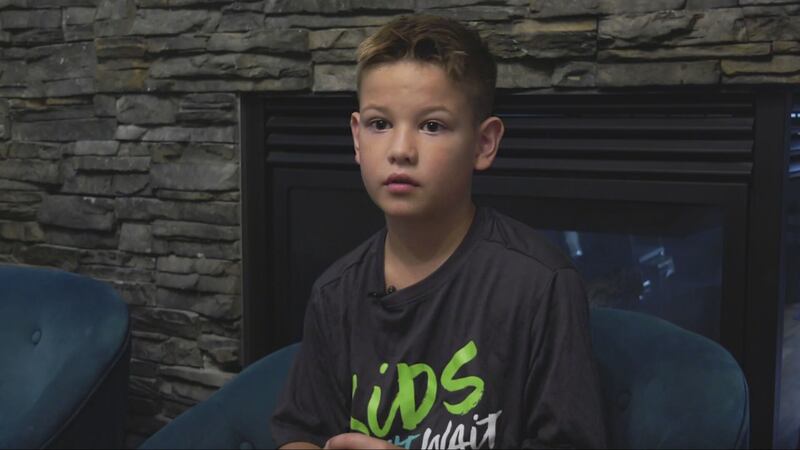
Riley Ostrowski

What followed was a 12-day stay at Alberta Children’s Hospital, along with months of appointments, testing and uncertainty before Riley was eventually diagnosed with systemic juvenile idiopathic arthritis, or systemic JIA.

Riley’s mother, Jennifer Schultz, says that at its worst, the disease affected as many as 14 of her son’s joints.

“He experienced high fevers, rashes, fatigue, and pain and until this happened, we had no clue kids could get arthritis,” she said.

“It took about four months to get the diagnosis, but the fact that we were able to get treated right away was a Godsend because some families have spent more than a year or two years before they got an answer.”

Riley’s mother, Jennifer Schultz, says that at its worst, the disease affected as many as 14 of her son’s joints

Riley was initially treated with anti-inflammatory medication and steroids before moving to biologic therapy.

His family says the medication made a dramatic difference.

“The treatments have been amazing and work very fast,” Schultz said.

Riley initially received treatment intravenously at Alberta Children’s Hospital every few weeks, but has since transitioned to injections at home.

His condition is now largely in remission, and he has returned to many of the activities he enjoys, including playing baseball.

“I sometimes feel like a normal kid. I was freaked out when I first started having to inject these needles, but I feel a lot stronger,” Riley said.

“I love playing baseball, writing comics, and playing video games. So if there are any other kids out there with juvenile arthritis, it’s the love of your family that makes you strong.”

What is juvenile idiopathic arthritis?

Dr. Marinka Twilt, a paediatric rheumatologist at Alberta Children’s Hospital and professor of paediatrics at the University of Calgary, says juvenile idiopathic arthritis is an autoimmune disease in which the immune system mistakenly attacks the body’s own tissues.

The exact cause is not known and is likely influenced by a combination of genetic and environmental factors.

“It’s nothing that a patient or parent has done wrong, and nothing that they could have prevented from it to happen,” Twilt said.

Juvenile arthritis affects an estimated one in 1,000 children.

Twilt says symptoms in children can sometimes be difficult to recognize because younger patients may adapt to pain rather than complain about it.

“They’ll just find another way to still do what they want to do,” she said.

Some children may stop using an affected joint, become unusually tired or lose the ability or willingness to do activities they previously enjoyed. Younger children may suddenly want to be carried more often or stop running and playing.

“If you see that there’s regression in what they could do before, that would be really a sign to go and see a health-care provider,” Twilt said.

Twilt says treatment options for juvenile arthritis have improved significantly, but awareness remains important because earlier diagnosis can help children access effective treatment sooner.

“Awareness is good for the patient that they’re earlier diagnosed, but then when they’re diagnosed, we have to have access to treatment,” she said.

Building support for families

Cassie + Friends, a Canadian charity supporting children with juvenile arthritis and other rheumatic diseases, says roughly 25,000 children across the country are living with those conditions.

“We really want people to understand that kids get arthritis too,” said David Porte, chair and one of the organization’s founders.

Porte helped establish Cassie + Friends after his own daughter, Cassie, was diagnosed with juvenile arthritis at 20 months old.

The organization now provides families with education, financial and emotional support while also connecting children with others facing similar diagnoses.

Cassie + Friends, a Canadian charity supporting children with juvenile arthritis and other rheumatic diseases, says roughly 25,000 children across the country are living with those conditions

Cassie + Friends is holding a Calgary run and walk at Fish Creek Park on Oct. 3, bringing families, doctors and supporters together to raise awareness and funds.

“The medication is great; that’s what treats a disease. But it’s really building this community around it is what lets the families really thrive together,” Porte said.

“We really want people to understand that kids get arthritis too. We really want people to understand what those symptoms are, what they should be looking for if their child has sore joints in the morning, if they’re complaining about pain, that not to overlook it.”

Porte adds that the community events his team runs across Canada are also a chance to build awareness.

One of the challenges is access to treatment.

“The access is not consistent across the country. The access is not consistent for all kids and families, so that is one of the other things that we’re really working on.”

Growing economic burden in Alberta

Arthritis Society Canada is also using Arthritis Awareness Month to highlight the broader impact of the disease.

According to the organization, arthritis carries an estimated $5.1-billion annual economic cost in Alberta through expenses such as medication and hospital care, as well as lost productivity.

Trish Barbato, president and CEO of Arthritis Society Canada, said the report shows another $10 billion is also attributed to social value loss.

“The social impact cost is a new number. It is related to what do people lose because they’re in pain all the time, because they don’t have mobility.”

The cost of pain, reduced mobility, lost independence and the activities people can no longer take part in means arthritis is now the leading cause of disability across Canada.

Barbato adds that the Alberta figures also show the consequences for both individuals and the health-care system.

“It’s a failing of the system. It’s not a failing of individuals who choose to find another path,” Barbato said when discussing the challenges faced by people trying to access arthritis care.

She says improving access to community-based therapy and education could also help people manage the disease and, in some cases, reduce pressure on the health-care system.

“And so when you think about someone who says, ‘I have a bad knee,’ I always joke, ‘You do not have a bad knee. You have end stage arthritis.’”

“If you’re not mobile, if you can’t walk, that is going to impact your job and your ability to be productive.”

The report projects the overall economic and social burden of arthritis in Canada will rise from $142.4 billion annually today to $222.3 billion by 2055, as the number of people living with the disease is expected to grow from more than six million to at least 10 million.

Primary Care Alberta says arthritis can significantly affect a person’s health, independence and quality of life, and that provincial guidance is available to help health-care providers assess and manage the condition.

It says Albertans can also access supports including arthritis education, physiotherapy, self-management workshops and exercise programs.

https://www.ctvnews.ca/calgary/article/calgary-boys-arthritis-diagnosis-highlights-a-disease-many-still-associate-only-with-old-age/ 

Thursday, 19 March 2026

Why arthritis in children can threaten eyesight

From medicalxpress.com

Arthritis is often associated with older age, but it also affects children. One of the most common forms is juvenile idiopathic arthritis (JIA), an inflammatory condition that causes persistent joint swelling and pain.

For reasons that remain unclear, between 10% and 30% of children with JIA also develop uveitis, an inflammatory disease of the eye. In some cases, this eye inflammation does not respond to treatment and can lead to sight loss.

A recent study from our laboratory shows that immune cells called B cells, best known for producing antibodies, play a previously underappreciated role in driving this process and may point to new treatment approaches.

JIA is diagnosed when a child or young person under 16 develops inflammation in at least one joint for more than six weeks with no clear cause. Around one in 1,000 children in the UK are affected. The condition includes several subtypes, most of which are autoimmune, meaning the immune system mistakenly attacks the body's own tissues.

Outcomes vary. With treatment, some children experience long periods of remission and may outgrow the condition. For others, inflammation persists into adulthood and can cause joint damage and disability. JIA can also affect organs beyond the joints, including the skin, gut and eyes. When it involves the eye, the condition is known as JIA-associated uveitis.

Much remains unknown about why some children with JIA develop eye inflammation while others do not. It is unclear whether the same immune pathways drive disease in both joints and eyes, or why inflammation most often affects the front of the eye, known as anterior uveitis. In many cases, the condition is silent and painless, allowing damage to accumulate unnoticed. Regular eye screening is therefore essential.

                                                                                                        Credit: CC0 Public Domain

Several risk factors are well established. Girls and children who develop JIA early in life, particularly before the age of six, are more likely to develop uveitis. Children who test positive for antinuclear antibodies are also at increased risk.

Even so, the biological mechanisms linking arthritis and eye disease remain poorly understood, and the role of antibody-producing B cells has received relatively little attention.

To investigate this, our study analyzed blood samples from more than 150 children with arthritis. Certain types of B cells were more abundant in those who had developed uveitis than in children with arthritis alone. A distinctive aspect of the research was the opportunity to examine samples taken directly from affected eyes.

In some children, uveitis can lead to cataracts or glaucoma, making surgery necessary to preserve vision. During these procedures, small amounts of biological material that would normally be discarded can be collected for research. Using these samples, we found that activated B cells had migrated into the eyes of children with JIA-associated uveitis.

Laboratory experiments showed that blocking communication between B cells and another type of immune cell, known as T cells, significantly reduced inflammation. The drug used to achieve this is already being tested in clinical trials for multiple sclerosis and lupus, raising the possibility of repurposing it for children with treatment-resistant disease.

The need for new approaches is clear. Currently, one in four children with JIA-associated uveitis do not respond to the only approved biologic therapy, and by age 18 nearly a third have lost some vision in at least one eye.

These findings point to a potential new treatment pathway and highlight a broader issue in medical research. There is often a delay of many years before therapies developed for adults are tested in children, even when the underlying inflammatory mechanisms are similar.

Improving how discoveries are translated into paediatric care could significantly change outcomes for children with arthritis and uveitis. Earlier intervention, targeted therapies and faster access to treatments already being explored in adult disease may help prevent vision loss, and reduce the long-term burden on children and their families.

https://medicalxpress.com/news/2026-03-arthritis-children-threaten-eyesight.html 

Thursday, 18 September 2025

5 Common Questions About Juvenile Arthritis

From healthcare.utah.edu

Receiving a diagnosis for your child can be both frightening and confusing—especially when it’s a condition like arthritis, which many associate with aging. But juvenile arthritis is a real and manageable condition that affects children, and understanding it is the first step in supporting your child’s health and well-being.

Erin Treemarcki, DO, a paediatrician and paediatric rheumatologist at University of Utah Health, answers common questions parents may have about juvenile arthritis.

1. What is juvenile arthritis?

Juvenile arthritis is a condition that causes joint inflammation under the age of 16. There are many types of juvenile arthritis, but the most common is juvenile idiopathic arthritis (JIA)—a chronic form that lasts at least six weeks and isn't caused by an infection or another autoimmune disease.

The term “idiopathic” means the cause of the condition is unknown.

“We don't really know why some children get it and some don't,” Treemarcki explains. “Nothing you did or did not do caused the arthritis.”

2. What are the first signs and symptoms?

Juvenile arthritis can be tricky to spot at first. Symptoms can flare up and then become less noticeable. And depending on your child’s age, they may have difficulty communicating their symptoms to you. Symptoms may also mimic other childhood conditions.

Talk with your pediatrician if your child experiences these symptoms:

  • Pain and stiffness: Especially noticeable after waking up or after long periods of sitting, such as during a long car ride. Your child might limp in the morning but walk normally by the afternoon.
  • Swelling: Joints may appear puffy or feel warm to the touch.
  • Limited range of motion: Pain and stiffness may cause the affected joints to lose mobility and flexibility.

3. Is there a cure?

There’s currently no cure for juvenile arthritis, but children can go into long-term remission, where symptoms can be minimal or disappear for months or even years.

“We have really good treatments for JIA, and the goal of our treatments is to have those symptoms go away,” Treemarcki says. “That way, kids can be kids and do everything that they’d like to do.”

4. How is juvenile arthritis treated or managed?

Early diagnosis and symptom management are key to achieving long-term remission. While treatment plans vary by child, the main goals are to:

  • Relieve pain and stiffness in the joints
  • Maintain joint function and movement
  • Reduce inflammation
  • Prevent permanent damage

Your child’s medical team will work with you to determine which medications work best for them. Additional ways to manage symptoms include:

  • Physical therapy
  • Physical activity
  • Massage and acupuncture
  • Heat therapy to reduce pain and stiffness
  • Pain relief medications, including NSAIDs and creams, as advised by their doctor
  • Mental health support to help your child navigate chronic illness

Because JIA can also affect other parts of the body—like the eyes, skin, or gastrointestinal tract—your child may need to see additional specialists.

5. Can my child still play sports and go to school?

Yes, children with juvenile arthritis can still enjoy school, sports, and other activities.

Treemarcki recommends physical activity for her patients with JIA, but caution should be taken with certain sports due to injury risk based on the amount of arthritis a child has.

At school, your child may need accommodations for additional support.

“Our team at the University of Utah has letters prepared for schools so parents can request what’s called a 504 plan,” Treemarcki says. “This allows them to have specific accommodations for their child, such as access to an elevator or alternative assignments during a PE class.”

A juvenile arthritis diagnosis for your child is the beginning of a journey. But working with a care team can help them live a happy and normal life.

https://healthcare.utah.edu/healthfeed/2025/09/5-common-questions-about-juvenile-arthritis 

Wednesday, 28 February 2024

Children get arthritis too, with life-changing effects – but exercise can help

From theconversation.com

Arthritis is usually associated with older people but kids can suffer too. Juvenile idiopathic arthritis (JIA) is the most common type of arthritis in children. It affects about about 1 in 1,000 kids under 16 in the UK (roughly 15,000 children), and causes joint pain and inflammation in the hands, knees, ankles, elbows and wrists – although it can affect other body parts, too.

There’s no cure for JIA. Pain can be managed through treatments to ease symptoms, reduce pain and swelling, and prevent joint damage. Medications such as immunosuppressant methotrexate and biological medicine etanercept are widely used. But these treatments can have side effects, such as decreasing ability to fight infection.

Physical activity is essential for kids with juvenile idiopathic arthritis, but sometimes there’s worry it might make their symptoms worse. This condition can cause joint pain, stiffness, and weak muscles, which might stop children from being active. Yet even with these challenges, exercise is beneficial for children with JIA.

JIA isn’t just a physical issue. It affects social connections and future independence, requiring more than medical care. Teens with JIA struggle more than their peers, bringing extra difficulties with school, career choices, staying active, and social development.

How arthritis leaves kids isolated

In particular, JIA students struggle with attendance and participation. They may need to avoid some physical activities, which can leave them feeling isolated and impact their studies.

Schools can support them with tailored programs that address their needs, helping them manage their illness and stay engaged in school. This support is vital for their educational success and future career prospects, but missing school and activities can still hinder their achievements.

If the teenage years are not handled well, it can affect their work life later on. They might find themselves missing work often, struggling to focus while at work, or facing disabilities that make working difficult.

JIA changes over time, which can also make work more difficult. Some people might see their symptoms improve and go into remission, while others might deal with ongoing disability. This uncertainty makes planning for the future and finding the right job even more challenging.

It’s essential, then, to help these young people manage their illness and support their mental and social needs at an early stage.

Physical Activity

One thing that can make a difference is enabling them to take part in physical activity. Lack of activity can lead to weak bones and a lower quality of life whereas appropriate exercise can help make children’s bones stronger, build muscle, improve their ability to exercise, and make them feel better overall. Experts suggest children with JIA should try to be active for 60 minutes a day in a way that suits their health and symptoms.

JIA doesn’t have to preclude taking part in sports, as demonstrated by professional golfer Kristy McPherson and American football star Charcandrick West who forged careers as elite athletes despite the challenges of their condition.

Yet, kids with this condition often do less exercise than their peers, illustrating the need for clear, tailored advice on how children with JIA can exercise safely. This advice should be part of a bigger plan that includes their medical treatment and regular, suitable exercise to help improve their health and avoid future problems.

The problem is low awareness about arthritis in young people can prevent them from getting the support they need to thrive. So it’s crucial for adults in influential roles, like teachers and policymakers – such as politicians and healthcare commissioners – to understand these challenges to improve support for young people with JIA.

Research is underway at the University of Manchester to better understand the impact of various juvenile rheumatic diseases, including JIA, on adolescents and young adults. Our research aims to address some of the unique challenges faced by young people with JIA by informing the development of evidence-based policies that can be implemented by schools, in the work place and government policy to help support the needs of young people with arthritis.

JIA may not always be visible, yet its profound impact on young lives extends far beyond childhood, influencing education, social connections, and future employment. Recognising the full scope of JIA’s effects, alongside ensuring comprehensive support that encompasses both medical and social care, is essential for empowering affected children to navigate their challenges more effectively and lead fulfilling lives.

https://theconversation.com/children-get-arthitis-too-with-life-changing-effects-but-exercise-can-help-223037