Showing posts with label walking. Show all posts

Thursday, 11 June 2026

Tiny Walking Changes Could Slow Knee Arthritis Down

From huffingtonpost.co.uk

There's a possibility it could even help delay surgery, researchers suggest 

While arthritis flare-ups can make you feel the need to rest more, the Arthritis Foundation described movement as the “best medicine” for the condition.

Exercise strengthens the muscles around your joints, creating better support for your bones. Staying active also lubricates affected areas, making them less stiff.

And according to research published in the journal The Lancet Rheumatology, a simple walking change can “reduce excessive joint loading related to disease progression”.

In other words, the smallest of changes to a person’s foot position could help to stop knee arthritis from becoming worse.

How might your foot position help with arthritis?

In this study, the foot position of 68 participants with mild knee osteoarthritis (the most common form of arthritis) seemed to affect how much stress was placed on their joints.

After gait analysis, computer models were used to find their optimal foot position. Half of the people involved underwent training to adjust their feet to their best walking posture, while others were left to keep strolling as they were.

They found that walkers who got used to changing their foot angle to the optimised position saw slower degeneration of their knee cartilage (the shock-absorbing tissue in joints which tends to break down in those with arthritis) than those who didn’t.

Their pain score also went down 2.5 points, which was equivalent to the benefits seen from pain-relieving medication.

Participants who didn’t adjust their feet, meanwhile, only enjoyed a roughly one-point pain reduction.

And advanced MRI analysis showed that those who adjusted their feet according to the researchers’ guidelines experienced 4% less load on their knees while walking. Those who stayed the same saw a 3% increase in load.

More load, or stress, on arthritic knee joints can make the condition worse.

Researchers hope simple interventions like these could delay surgery

“Altogether, our findings suggest that helping patients find their best foot angle to reduce stress on their knees may offer an easy and fairly inexpensive way to address early-stage osteoarthritis,” said Dr Valentina Mazzoli, study co-author and assistant professor of radiology at the NYU Grossman School of Medicine.

“These results highlight the importance of personalising treatment instead of taking a one-size-fits-all approach to osteoarthritis.”

She added that the intervention could even help to put off invasive medical procedures, which are sometimes needed in severe arthritis cases, for longer.

“Although our results will have to be confirmed in future studies, they raise the possibility that the new, non-invasive treatment could help delay surgery,” she shared.


https://www.huffingtonpost.co.uk/entry/walking-changes-slow-knee-arthritis_uk_6a2923eee4b0a99062fa753f

Saturday, 23 May 2026

No pills, no surgery: Scientists uncover simple arthritis pain relief method

From thehealthsite.com

Researchers found a simple walking adjustment which may significantly reduce arthritis pain, improve joint function and potentially slow knee damage without needing medication, injections or surgery

Almost 25 per cent of older adults typically aged 40 and above suffer from painful osteoarthritis which is a condition that can make simple tasks such as walking, climbing stairs or standing for extended periods hard. Over time, the disease deteriorates the cartilage that provides cushioning for the joints and once the damage occurs there is no way to reverse.

While the standard approach for treatment often focuses on pain relief or replacement surgery for the joint, a new study claims that as simple as changing the way people walk can help reduce pain and slow joint damage. The team of researchers from the University of Utah, New York University and Stanford University found that personalized gait retraining was quite effective when it comes to easing symptoms for individuals with knee osteoarthritis.

                                                                                                                (Image: AI Generated)

The study published in The Lancet Rheumatology was based on modifying walking style examining how the angle of the foot changes during gait. Participants were instructed to turn their toes slightly inwards or outwards depending on what caused the least pressure on their knee joint. Explaining the concept Scott Uhlrich, study co-lead said, "We've known that for people with osteoarthritis, higher loads in their knee accelerate progression and that changing the foot angle can reduce knee load. So the idea of a biomechanical intervention is not new, but there have not been randomized, placebo-controlled studies to show that they're effective."

Why personalisation matters

Osteoarthritis often occurs on the inside of the knee as it is subjected to more body weight. Although the adjustments for walking do not work for all patients some participants found that setting their toes slightly inwards helped while others found it helpful when turned outwards.

According to Uhlrich, past studies have been unsuccessful because the same walking protocol was used for all participants. He explained, "Each person's new walking pattern was customized to him or her and helped increase the amount of weight individuals could offload from their knee, which was likely a factor in the positive knee cartilage and pain results we observed."

How the trial was conducted

The trial included 68 people with mild to moderate knee osteoarthritis. Participants' walking patterns were initially evaluated on the basis of MRI, pressure-sensitive treadmills and motion capture cameras. Afterwards they received six weeks of gait training sessions during which they were instructed to keep their designated foot angle with vibration feedback devices placed on their shin.

The participants were instructed to walk for at least 20 minutes a day after the training period to make the movement automatic. The results showed that after a year the participants in the real gait retraining group experienced similar pain relief as with common medications. MRI scans also revealed lower deterioration of cartilage health markers in the group compared to the placebo group.

Even though results were promising, researchers emphasized that patients shouldn't try to alter their gait on their own without professional help. The incorrect foot angle may cause more stress to the knee rather than less.

Disclaimer: This content is for informational purposes only and is not medical advice. Consult a qualified healthcare professional before making changes to arthritis treatment or exercise routines.

https://www.thehealthsite.com/diseases-conditions/no-pills-no-surgery-scientists-uncover-simple-arthritis-pain-relief-method-1325959/ 

Tuesday, 28 April 2026

Exercise Your Way to Less Arthritis Pain

From wth.org

Arthritis affects millions worldwide and is a leading cause of chronic pain and disability. While medications, injections, and surgery can be a part of managing symptoms, sometimes you can avoid all those with a less medical approach. Regular exercise is one of the most effective, low-risk strategies to reduce arthritis pain, improve function, and enhance quality of life. 

It is estimated that in the United States alone, 58.5 million people aged 18 years and older have arthritis.  It is a leading cause of disability, with 25.7 million adults reporting activity limitations. Projections suggest that by 2040, an estimated 34.6 million adults with arthritis will report arthritis related activity limitations, which is due to the growth of an aging population. Osteoarthritis is the most common form, affecting over 32 million adults. Arthritis is a major driver of medical costs and loss of productivity.

Portrait of Mark Cutright, MD, Orthopedic Surgeron at West Tennessee Medical Group Innovative Orthopedics.
Mark Cutright, MD

“Exercise helps reduce arthritis pain and inflammation in several ways,” said Mark Cutright, MD, an orthopaedist with West Tennessee Medical Group’s Innovative Orthopaedics. “Regular movement stimulates blood flow, which delivers nutrients and removes inflammatory by-products. Exercise also triggers the release of endorphins, which are the body’s natural painkillers and can lower the levels of inflammatory chemicals over time.”

Regular exercise strengthens muscles. Strong muscles act as shock absorbers and stabilize joints, reducing stress on cartilage and connective tissue. This is especially important for weight-bearing joints like knees and hips. Exercise increases joint range of motion and flexibility. Gentle stretching and full-range movements prevent stiffness, maintain mobility, and make daily activities easier. It can also improve balance and coordination, which can reduce the risk of falls. Exercise can help you maintain a healthy weight, which reduces the load on joints, which can directly lower pain and slow the progression of the disease. 

Numerous studies and clinical guidelines support exercise for osteoarthritis and rheumatoid arthritis. For knee and hip osteoarthritis, there is evidence that shows exercise reduces pain and improves function.

“A balanced exercise program that can be beneficial for arthritis pain should include aerobic, strength, flexibility, and balance training. As each component contributes differently to pain reduction and joint health,” said Dr. Cutright. “Low-impact exercise is essential for reducing arthritis pain, as it strengthens muscles, improves joint flexibility, and lowers stiffness. Consistent movement reduces stiffness, while strength training protects joints.” 

The top exercises for arthritis include walking, water aerobics, swimming, yoga, and tai chi.

Aerobic exercise improves cardiovascular fitness, helps with weight control, and reduces systemic inflammation. Low-impact walking on smooth surfaces, cycling, or using an elliptical reduces pressure on joints. Other options include swimming, water aerobics, and low-impact dance classes.

Strength training builds muscle around affected joints, improves joint stability, and supports daily activities. It has also been shown to decrease pain and increase strength and mobility. 

Examples of this type of exercise include resistance bands, bodyweight exercises, free weights, weight machines, and Pilates-style controlled resistance.

Flexibility and range-of-motion exercises maintain or increase joint mobility and reduce stiffness. These include gentle stretching, modified yoga, tai chi, joint-specific range-of-motion activities, and improve range of motion, balance, and reduce stress. Balance exercises such as standing on one leg with support, heel-to-toe walking, tai chi, and stability ball routines decrease fall risk and improve functional stability. Mind–body practices like tai chi and yoga also provide moderate benefits for pain, function, and psychological well-being.

Exercise is a cornerstone of arthritis management. Regular, well-chosen movement reduces pain, strengthens muscles, maintains flexibility, and improves overall function and mood. A successful program combines aerobic activity, strength training, flexibility, and balance work that is tailored to your condition, abilities, and preferences. Start gently, progress gradually, listen to your body, and seek professional guidance when needed. With consistency and the right approach, you can significantly reduce arthritis pain, allowing you to enjoy more comfortable, active days.

https://www.wth.org/blog/exercise-your-way-to-less-arthritis-pain/ 

Thursday, 5 March 2026

What if changing the way you walk could really relieve arthritis?

From futura-sciences.com

Nearly one in four adults over 40 lives with the daily discomfort of osteoarthritis, a condition that gradually wears down the cartilage cushioning the joints. Once that cartilage is damaged, there is no way to restore it. For many patients, treatment becomes a long road of pain medication, eventually leading to joint replacement surgery 

A study published in The Lancet Rheumatology on August 12, 2025 suggests there may be another option: gait retraining. Researchers from the University of UtahNew York University, and Stanford University found that adjusting the angle of the foot while walking can significantly reduce pain. Also slowing cartilage deterioration in the knee. The findings come from a year long randomized controlled trial.

                                              What if changing the way you walk could really relieve arthritis? © Harbucks

First placebo controlled proof

Co-led by Scott Uhlrich, assistant professor of mechanical engineering in Utah’s John and Marcia Price College of Engineering, the study is the first placebo controlled trial to show that a biomechanical intervention can effectively treat osteoarthritis symptoms. “We’ve known that for people with osteoarthritis, higher loads in their knee accelerate progression, and that changing the foot angle can reduce knee load,” Uhlrich said. “So the idea of a biomechanical intervention is not new, but there have not been randomized, placebo-controlled studies to show that they’re effective.”

Participants who modified their walking pattern reported pain relief comparable to common medications. Furthermore, MRI scans revealed slower cartilage deterioration in those who adopted the personalized walking adjustments, compared to those who received a sham treatment. “The reported decrease in pain over the placebo group was somewhere between what you’d expect from an over-the-counter medication, like ibuprofen, and a narcotic, like OxyContin,” Uhlrich said.

A personalised approach to knee osteoarthritis

The researchers focused on individuals with mild to moderate knee osteoarthritis affecting the medial compartment. Specifically the knee’s inner side, which bears more load than the outer. Earlier studies often prescribed the same foot angle change to everyone. Not every knee responds the same way. For some participants, a standard adjustment did little to reduce joint loading and could even worsen it. This time, the team opted for a personalized strategy.

Lead researcher Scott Uhlrich measures a participant’s gait. At the beginning of the study, participants received a baseline MRI and walked on a force-sensitive treadmill while motion-capture cameras recorded their walking mechanics. © Utah Movement Bioengineering Lab

Using motion capture cameras and a pressure sensitive treadmill, researchers measured how each participant’s knee responded when they walked with their toes pointed slightly inward or outward. They then determined whether a five or ten degree shift reduced stress most effectively. Participants for whom no foot angle change reduced knee stress were excluded. That careful selection required screening 1,582 volunteers to recruit 68 participants, and may explain why previous trials produced inconclusive results.

Placebo versus intervention

After baseline MRI scans and gait assessments, the 68 participants divided into two groups. One group received a sham intervention, walking with a foot angle identical to their natural gait. The other adopted a customized foot angle shown to reduce knee loading. Both groups attended six weekly training sessions, during which a device attached to the shin delivered gentle vibrations as biofeedback, helping participants maintain their prescribed foot position while walking on a treadmill.

After the supervised phase, participants practiced their new gait for at least 20 minutes daily. Follow-up visits confirmed remarkable precision, with most staying within one degree of their assigned angle. After a year, participants reported their pain levels and underwent a second MRI. The reduction in pain fell somewhere between an over-the-counter anti-inflammatory and a stronger prescription painkiller. Meanwhile, imaging showed measurable protection of cartilage health.

A long term option for pain management

Beyond the numbers, participants expressed enthusiasm for the approach. One told researchers:

“I don’t have to take a drug or wear a device — it’s just a part of my body now that will be with me for the rest of my days, so that I’m thrilled with.” For many, the appeal was its simplicity. No daily medication. No device to wear indefinitely.

The motion capture technology used in the study is expensive and time consuming. However, researchers are developing mobile solutions using smartphone video and smart footwear to make personalization feasible in physical therapy clinics. “Especially for people in their 30s, 40s, or 50s, osteoarthritis could mean decades of pain management before they’re recommended for a joint replacement,” Uhlrich said. “This intervention could help fill that large treatment gap.” Further studies are needed before the approach can be rolled out broadly, but the trial’s scale and design give the findings more credibility than most early stage interventions can claim.

https://www.futura-sciences.com/en/what-if-changing-the-way-you-walk-could-really-relieve-arthritis_26670/

Tuesday, 3 February 2026

Daily physical activities provide greater benefits for osteoarthritis patients than handgrip strength

From news-medical.net

Daily physical activities play a far greater role in the well-being of patients with osteoarthritis than handgrip strength or isolated motor tasks, according to new research from the University of Sharjah.

The study, published in the European Journal of Applied Physiology, addresses what the authors describe as an "overlooked question" in osteoarthritis research and clinical practice: the best physical daily activities that can improve the well-being and quality of life for people living with this wear-and-tear joint disease.

Drawing on data from more than 38,000 adults across 28 European countries, the researchers examined how closely different everyday physical indicators relate to overall quality of life and the well-being of individuals with osteoarthritis.

We focused on two things: handgrip strength, a widely used indicator of overall muscle health, and motor tasks such as walking, standing up from a chair, climbing stairs, and managing fatigue."

Dr. Asima Karim, Lead Author, Associate Professor of Integrative Physiology, University of Sharjah

The study measured both handgrip strength and motor tasks alongside CASP 12, a well-established questionnaire that captures the extent to which individuals aged 50 and above feel control, autonomy, fulfilment, and pleasure in their lives. The questionnaire is routinely administered to respondents within the Survey of Health, Ageing, and Retirement in Europe (SHARE), the dataset underpinning the study.

Walking, standing, and climbing stairs matter most

"What we found was striking. While people with osteoarthritis had weaker grip strength and lower quality of life overall, it wasn't grip strength that told the real story," Dr. Karim explained. "Instead, difficulties with everyday movements - especially walking, climbing stairs, getting up from a chair, and persistent fatigue - were far more strongly linked to lower well-being."

The study shows that these routine actions, often taken for granted, are powerful indicators of how older adults perceive their independence, purpose, and enjoyment of life. "The message is clear: in osteoarthritis, quality of life is shaped less by how strong your hands are and far more by whether you can move through the world with confidence and energy," Dr. Karim explained.

By paying greater attention to such everyday motor challenges, the authors hope that their findings can help clinicians, caregivers, and policymakers better support over 600 million people worldwide living with osteoarthritis, many of whom struggle to maintain autonomy and dignity despite chronic joint pain and functional limitations.

While the study acknowledges the value of handgrip strength as a clinical measure, the authors argue that the real insight comes from understanding how people move through their day and where they encounter difficulty. Everyday activities that people often overlook, such as walking, standing up, and climbing stairs, emerged as some of the strongest signals of how older adults with osteoarthritis evaluate their lives.

"Osteoarthritis is not just a disease of the joints. It affects independence, confidence, and the ability to enjoy daily life. That broader impact is what our research brings into focus," said co-author Dr. Rizwan Qaisar, Associate Professor of Physiology at the University of Sharjah. "This research highlights a simple truth: supporting everyday movement may be one of the most effective ways to help older adults maintain dignity and autonomy."

Everyday mobility is crucial in osteoarthritis

The study also identifies fatigue as one of the most powerful predictors of poor well-being. Addressing fatigue should be a central part of osteoarthritis care, not a secondary concern, the authors argue. Dr. Qaisar said, "If we want to improve the quality of life for older adults with osteoarthritis, we need to look beyond medications and focus on mobility, energy, and functional independence."

A key takeaway, according to Dr. Karim, is that osteoarthritis affects more than the joints. It also diminishes how independent, confident, and fulfilled people feel in their daily lives, with individuals diagnosed with the condition consistently reporting lower quality-of-life scores than those without it.

"The pattern was similar for both men and women, even though women generally had lower grip strength," she noted. "Supporting mobility and reducing fatigue may have a meaningful impact on improving quality of life for older adults with osteoarthritis."

The authors hope that rehabilitation and physiotherapy groups, along with community and aging-focused organizations, will take an interest in the research that links daily movement to overall well-being, helping them design more effective programs for older adults.

Faster way for clinicians to spot declining quality of life

The authors note that the findings, showing that simple mobility tasks such as walking, standing up, and climbing stairs are powerful indicators of well-being, provide clinicians with quick, effective tools to identify older adults at risk of declining quality of life.

"The strong link between fatigue and poor well-being suggests that managing fatigue should be a priority in osteoarthritis care, not an afterthought," said co-author Dr. Firdos Ahmad, University of Sharjah's Associate Professor of Ischemic and Hypertensive Cardiac Diseases.

Dr. Karim added that community and rehabilitation programs may benefit from placing greater emphasis on improving everyday mobility rather than focusing on strengthening exercises, "since these daily movements have the biggest impact on how people feel about their lives."

The study's themes also have strong relevance for health tech companies working on mobility and aging. "Rehabilitation and physiotherapy groups are also interested in research that links daily movement to well-being. Community and aging-focused organizations may find the findings useful for designing programs that support older adults," Dr. Karim said.

For future research, the authors recommend examining different types of osteoarthritis separately, noting that knee, hip, and hand osteoarthritis may influence mobility and well-being in distinct ways.

https://www.news-medical.net/news/20260202/Daily-physical-activities-provide-greater-benefits-for-osteoarthritis-patients-than-handgrip-strength.aspx 

Friday, 21 November 2025

Science Reveals 3 New Ways to Relieve Knee Arthritis Pain

From webmd.com

Although joint damage is permanent, new research suggests promising ways to ease knee arthritis pain and possibly slow its progression 

If knee arthritis were a growth stock, you’d want to own a few shares.

Fifty percent of adults in the U.S. will develop knee osteoarthritis, which happens when the cartilage in the joint wears away and the bones rub more closely against one another. Once you have it, you can expect to live with it for 26 years, on average. 

While the damage can’t be reversed, new research offers promising ways to mitigate the pain and perhaps even slow the disease’s progress by targeting what drives it — things like body weight and mechanical load. 

Three recent studies exemplify the trend. 

Excess body weight has long been linked with increased knee arthritis risk. People with obesity have higher rates of knee arthritis, get diagnosed younger, and experience more pain and physical limitations. 

“Just telling people ‘go lose weight’ is not going to work,” said Elena Losina, PhD, a biostatistician and professor of orthopaedic surgery at Harvard Medical School.  

In a recent study, Losina’s research team created a model to project the cost effectiveness of five weight loss treatments for people with both obesity and knee arthritis: 

  • Diet and exercise
  • Tirzepatide (Mounjaro, Zepbound), a type of weight loss drug called a GLP-1 agonist
  • Semaglutide (Ozempic, Wegovy), another GLP-1 medication
  • Gastric sleeve surgery
  • Gastric bypass surgery

The model, which was based on a method called a Monte Carlo simulation, weighed each treatment’s price tag against its projected long-term impact on quality of life. For example, the more weight someone loses, the more pain relief they should experience, along with fewer movement limitations and a lower risk of health problems like type 2 diabetes and heart disease. 

The study found that tirzepatide gave people more years of healthier life than semaglutide, diet and exercise alone, or the “usual care” for obesity and arthritis (which may mean no treatment beyond monitoring symptoms). Semaglutide could still be cost-effective for some patients, the study found, but tirzepatide was rated as the best nonsurgical option overall. 

For people with a BMI of 35 or above, gastric bypass surgery scored highest. It produced the best results and cost less over a person’s lifetime than either of the medications, partly because surgery is a one-time cost rather than an ongoing expense.

“Bariatric surgery has very high efficacy in terms of weight loss for a very long time,” Losina said. But it’s a drastic procedure, with all the risks that entails. That’s why most people who have the choice opt for medication over surgery.

Since the study came out, the U.S. government announced an initiative to reduce the cost of GLP-1 medications — “an exciting development,” Losina said. 

Still, exercise remains the cheapest treatment option, and a second new study may help make it less painful.  

Exercise is the most commonly recommended treatment for knee arthritis, and walking is the most commonly recommended type of exercise. 

But the repetitive stress of walking — never mind running, basketball, or tennis — can sometimes worsen knee pain.

Arthritis typically begins in the medial compartment of the knee — the part closest to the other knee. 

Medial arthritis is three times more common than lateral arthritis, on the outer part of the knee. That’s because, when you walk, 70% of the compressive force lands on the medial compartment. 

The way you walk can make the problem worse by shifting even more of that stress to the inside of the knee.  

But a recent experiment from researchers at Stanford and the University of Utah showed that gait changes could help patients with medial compartment arthritis shift some of that force to the outside of the knee, reducing pain and making exercise a more viable option.

Participants took a gait retraining program where they learned to turn their toe in or out when landing and pushing off, whichever put less pressure on the medial compartment. 

Most of them (82%) were trained to turn their toes in slightly — by 5 or 10 degrees — when they walked. The rest were trained to turn their toes out. 

After six weeks, all of them reported mild to moderate reductions in walking-related pain. After a year of maintaining the modified gait, their pain had improved even more. 

The Stanford protocol relies on experts and special equipment, so it can’t be replicated at home. But you can talk to your health care provider about making small changes to the way you walk. A physical therapist may be able to assess your gait to reduce pressure on your knee. 

Fortunately, there is an exercise program that requires only internet access and a little floor space.

Physical therapist Kim Bennell, PhD, has been studying musculoskeletal injuries for three decades. 

In recent years, she and her research team at the University of Melbourne in Australia have increasingly focused on exercise, as it’s the most effective nonpharmaceutical, nonsurgical arthritis treatment.

One continual challenge: too many barriers to exercise for the people they were trying to help. 

Some live in remote areas without access to facilities or coaching. And some who live in cities and suburbs either don’t have transportation, aren’t mobile enough to get to a facility, or can’t afford to join a gym or pay a trainer.

“So we decided to design and test unsupervised programs that we could offer free,” said Bennell, a professor at the university’s Centre for Health, Exercise, and Sports.

Her team’s most recent study featured an online tai chi program designed for adults with knee arthritis. Participants were given access to a series of 45-minute tai chi videos, led by one of the study’s co-authors, and instructed to do three 45-minute sessions per week. 

After 12 weeks, 73% of the participants reported a clinically meaningful reduction in knee pain while walking, along with improvements in physical and mental well-being. 

This is the third online exercise program Bennell’s team has created for knee arthritis patients. The first was a six-month strength program, published in 2021. That was followed by a three-month yoga program in 2022. 

All three are free to access for anyone who wants to try them. So far, Bennell said, they’ve had 60,000 users from 120 countries.

“The tai chi program seemed to give better results for pain, compared with the yoga program,” Bennell said. Research shows tai chi can improve strength, mobility, balance, and endurance, which may lead to more controlled movement patterns, with better joint stability. The strength program was similar to tai chi in terms of pain reduction. 

Arguably the most important factor for the program’s success: “Participants did report high satisfaction with all three programs and were highly likely to recommend them to others,” Bennell said. 

https://www.webmd.com/pain-management/knee-pain/news/20251119/science-reveals-3-new-ways-relieve-arthritis-knee-pain

Friday, 15 August 2025

Researchers say changes in stride can ease arthritis pain

From upi.com

Slightly altering your stride while walking could considerably ease pain caused by wear-and-tear knee arthritis, a new study says.

Foot positioning while walking can reduce stress on a person's knee joint, researchers reported Tuesday in The Lancet Rheumatology. 

People trained to angle their feet slightly inward or outward from their natural alignment experienced slower degeneration of the cartilage cushion inside their aching knees, results show.

They also reported greater reductions in knee pain and better knee function after a year, researchers said.

"Altogether, our findings suggest that helping patients find their best foot angle to reduce stress on their knees may offer an easy and fairly inexpensive way to address early-stage osteoarthritis," said co-lead researcher Valentina Mazzoli, an assistant professor of radiology at NYU Grossman School of Medicine in New York City.

This strategy could lower patients' reliance on painkillers and delay the need for knee replacement surgery, Mazzoli added in a news release.

A new study published in The Lancet Rheumatology suggests foot positioning while walking can reduce stress on a person's knee joint. Photo by Samuel Corum/UPI

For the study, researchers recruited 68 people with knee osteoarthritis and recorded their gait while walking on a treadmill. A computer program simulated their walking patterns and calculated the maximum stress they were placing on their knees.

The research team also generated computer models of four new foot positions angled inward or outward by 5 or 10 degrees and estimated which would best reduce stress on each person's knees.

Participants then were randomly divided into two groups. Half were trained in six sessions to walk with the foot angle ideal to them, and the other half were told to continue walking normally.

Overall, those who adjusted their gait reduced maximum loading in their knees by 4%, while those who kept their normal stride increased loading by more than 3%.

Further, those taught the new foot position experienced a 2.5-point reduction on a 10-point pain scale, equivalent to the effect of over-the-counter painkillers like NSAIDs and acetaminophen, researchers said.

"These results highlight the importance of personalizing treatment instead of taking a one-size-fits-all approach to osteoarthritis," Mazzoli said. "While this strategy may sound challenging, recent advances in detecting the motion of different body parts using artificial intelligence may make it easier and faster than ever before."

AI software that estimates joint loading using smartphone videos is now available, allowing doctors to perform a gait analysis without specialized lab equipment, researchers noted.

The team next plans to test whether those AI tools can indeed help identify the best walking method for knee arthritis patients, Mazzoli said. They also plan to expand their study to include people with obesity.

https://www.upi.com/Health_News/2025/08/13/arthristis-relief-stride-change-study/1841755095134/

Monday, 23 December 2024

Walk your way to a healthier life

From ksltv.com

SALT LAKE CITY — Is one of your New Year’s resolutions to exercise more? Maybe you just want to get out of a sedentary lifestyle and start moving more. In that case, try a walking routine.

Let’s Get Moving host Maria Shilaos spoke with Dr. Julia Kammel, a sports medicine physician with Intermountain Health, to learn how we can walk our way to better health with just a few simple steps.

According to Kammel, walking can help strengthen your immune system, relieve arthritis pain, manage diabetes and high blood pressure, and more.

“We encourage everyone to walk as much as they’re able to, even if they can just walk three minutes a day,” Kammel said. “It doesn’t have to be all at once.”

What does a healthy walking routine look like?

To start, get a pair of shoes that are comfortable and not too tight. And make sure you’re well hydrated before the walk.

“Something that some people may not think about or focus on is just having a relaxed body posture, letting the shoulders drop, and looking forward with the chin up so your neck doesn’t get tired during the walking,” Kammel said.

Kammel also suggested loosening up the muscles and gently rolling your feet so that you’re not putting too much pressure on your joints.

Walking inside vs. walking outside

Walking can help strengthen your immune system, relieve arthritis pain, manage diabetes and high blood pressure, and more. (Canva)

You can take walks practically anywhere depending on what works best for you. If you love the outdoors, take your walk outside.

“Getting a little bit of sunlight can be very helpful for your circadian rhythm, and being around nature can be incredibly helpful for your mood as well,” Kammel said.

If you prefer to walk on a treadmill at your neighborhood gym, that works just as well.

Does distance matter?

Both short – and long–distance walks have their own benefits. However, Kammel said the intensity of the walk is more important than the distance, which is why she encouraged brisk walking.

“Even if you’re doing short walks but maybe you’re walking a little bit faster, that can be really helpful for your health,” Kammel said.

In order to reach the ideal level of intensity, it helps to not push too much too fast, but just enough.

“A good guide for that is trying to push it enough so that you can still carry on a conversation, but you’re a little bit out of breath while you’re trying to do it,” Kammel said.

https://ksltv.com/719527/walk-your-way-to-a-healthier-life/ 

Saturday, 2 November 2024

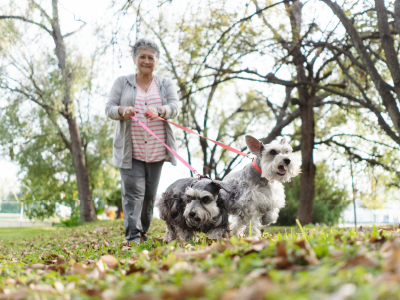
Dog Walking Helps Arthritic Joints

From arthritis.org/health-wellness

Daily walks keep best furry buddy happy — and your joints, too 

Any dog owner knows that take-me-for-a-walk look: puppy eyes pleading, head tilting, an “oh, please” woof and tail thumping. You probably think you’re doing Fido a favour when you give in and take him for a stroll. Turns out, he may be doing you the favour. Walking has many benefits for people living with arthritis.

Eager canine companions virtually guarantee that their humans walk daily, even when you’re tempted to stay home because of flares, lousy weather or plain old laziness. Walking a dog doesn’t require extra expense, special clothes or going to a gym, and dogs aren’t interested in breaking the routine by taking a day off or going on vacation. Consistency, such as sticking to daily walks, is key when it comes to gaining the benefits of exercise.

Research has shown that people who have dogs tend to be more physically active than those who don’t. Numerous studies have shown benefits of increased physical activity from dog walking, from potentially reducing anxiety to easing the impacts of COPD to an association with lower rates of cardiovascular disease. One small study found that people who had a dog walked more often and lost as much as 14 pounds in a year. That is particularly good news for people with arthritis, because research also has shown that for every one pound lost reduces pressure on weight-bearing joints by four pounds. 

When it comes to selecting a furry friend, you may want to avoid very large or active breeds unless they are properly trained not to pull, jump or otherwise put your joints at risk. Consider adopting a calm, middle-aged or senior dog from a shelter, where staff have already vetted its temperament. And look for leashes and other devices that help deter your pup from pulling or lunging.

https://www.arthritis.org/health-wellness/healthy-living/physical-activity/walking/walking-a-dog-benefits-joints

Sunday, 14 January 2024

'Just get started moving': Even short walks can improve multiple aspects of patient health

From healio.com

Key takeaways:

  • Walking is a great starting point for patients looking to exercise more because it improves various areas of health.
  • PCPs can help motivate the more hesitant patients with tips like creating a good playlist.

Primary care physicians often recommend patients exercise, but because convincing them to get active can be easier said than done, it is often a good idea to start with short daily walks, according to experts.

Exercise is a critical component of preventive health — a cornerstone of primary care practices, Sarah Sams, MD, FAAFP, a member of the board of directors of the American Academy of Family Physicians, told Healio.

“[Primary care physicians are] in a perfect position to recommend that for our patients because there are so many benefits not only from a physical standpoint but also from an emotional health standpoint, which we treat as well,” Sams said.

Many PCPs are already telling patients they should exercise more regularly, “but I think it stops there,” Robert Dolansky, DO, a board-certified osteopathic physician specializing in family medicine and American Osteopathic Association board member, said.

“Patients need more direction about how to get started,” he said. “Walking is a great place to get started.”

Most physicians instruct patients to follow guidelines from WHO and the American Heart Association, both of which recommend 150 minutes of moderate intensity aerobic activity every week — usually five sessions with 30 minutes of activity. But Sams said, “that’s not realistic for everyone, especially starting out.”

“What I tell my patients is, if they haven't been moving at all, just get started moving,” she said. “Any kind of movement is better than none at all. And then we can work into it gradually.”

Sams described her experience with a patient who was overweight, had diabetes and “could barely get out of the house” when Sams told her to just begin walking to the mailbox daily.

“She got to where she was walking a mile and then she ended up starting to go to the gym and she lost quite a bit of weight, which helped her arthritis, got her diabetes under control, and as she worked into it gradually, she felt better and was able to do more and more,” Sams said.

Because it is “not as painful” as physical activities like weightlifting or running, Sams said it is easier for PCPs to convince patients to start getting active by recommending simple walks — especially when they describe the various health benefits.

“Helping [patients] to find other benefits besides just the absolute exercise benefit of it, I think can help,” she said.

Health benefits

Previous research has indicated that walking is connected to a variety of health outcomes. Alongside the well-known benefits for weight management, walking has also been linked to improved cardiovascular, neurological and psychological health, Dolansky and Sams said.

Sams said that because hearts are muscles, “exercising that muscle is an important part of keeping your heart healthy.”

“The increased heart rate from walking will increase blood flow, which, in time, can help to decrease blood pressure and cholesterol,” Dolansky said. “It will also help to boost your mood and energy by releasing endorphins and increasing oxygen flow to all parts of your body.”

Dolansky also noted that the release of certain hormones “can promote the growth of new neurons and overall brain function.”

“The increased blood flow, oxygenation and hormones flowing through the brain enhances memory, attention and problem-solving skills,” he said.

The psychological benefits have to do with the release of endorphins, commonly referred to as the “feel good hormone,” Dolanksy explained.

“Regular exercise can help decrease symptoms of depression, reduce stress levels and increase overall mood,” he said.

Sams also said the endorphin increase following exercise can be beneficial for patients struggling with their mental health.

“In patients with depression, I often will recommend exercise as one of many things that they can do to help with their depressive symptoms,” she said.

Sams also said walking can also help improve endurance, joint pain and sleep habits.

“For every pound of weight that you lose, you take off about 10 pounds of load on your knee joints and your ankle joints, so that can be really important in patients who have significant arthritis,” Sams said. “Even a 10-pound weight loss is like taking 100 pounds of weight off of the joint, so that's very important.”

However, Dolansky stressed that “walking is just the gateway to better physical fitness.”

“Although it is a great place to start ... it is also important to add in weight and resistance training for muscle and bone health, and stretching for flexibility,” he said.

Sams said that patients do not even have to find another activity to add stretching and weight training to their usual walking routine.

“You can add stretching and even some strength training while you're walking just by carrying some little weights in your hands or putting little ankle weights on while you're walking. That can do some extra strength training,” she said. “You can stop and do some stretching along your path. There are ways that you can incorporate some of those other types of activities to the walk as well.”

Individualise care and lead by example

PCPs should individualize care for their patients, tailoring exercise recommendations to account for their specific health needs, according to Dolansky and Sams. This can start with a simple assessment of what exercise the patient is currently doing, Dolanksy said.

“Then, ask the patient to keep a log of their activities for a month and bring the log back to the next visit,” Dolansky suggested. “The physician and patient can work together to develop a safe but sustainable plan to increase activity. This plan can be reassessed and adjusted at each visit. It would also be helpful if the PCP’s office had a toolbox of exercise resources specific to their community like park maps, walking trails, walking groups and group activity centres.”

Dolanksy and Sams also discussed the importance of how PCPs present new exercise opportunities to each patient. Previous research has indicated the way PCPs talk to their patients matters; for example, the way in which PCPs present weight loss has been connected to treatment uptake levels.

“You definitely want to keep the attitude positive,” Dolansky said. “It's often beneficial to frame increasing exercise as a means of getting healthier instead of simply losing weight.”

It can also be helpful to share personal experiences with patients, just like when working with patients on their diet or smoking habits, Sams said.

“I kind of use that as a motivation,” she said. “I've actually sometimes done my own medical paperwork while I'm on the treadmill and I will call patients about lab results. And they're like, ... ‘Oh okay, you lead by example as well.’”

Motivational tips

The convenience of walking is one of the benefits of walking that PCPs can highlight when recommending exercise, Dolansky and Sams said.

“Walking doesn't cost a thing and can be done just about anywhere,” Dolansky said. “You can even start by walking or marching in place right in your own house. You can walk in the neighbourhood, mall, shopping centre or parks. The options can be endless.”

PCPs can also offer tips to make a walk fun and enjoyable, he said — for example, “a good playlist is a good start.”

“But you should always be updating the list so it doesn't get monotonous,” Dolansky said. “I personally keep it interesting by walking with my dog and listening to an audiobook. Another great option to keep things interesting and add accountability is to find a walking buddy.”

Sams also said that recommending patients walk with friends is a great motivational tactic. “How many times do we say to our friends, ‘Hey, we should get together and have a cup of coffee’ or lunch or whatever, and then we never do because we don't have time?” she said. “But scheduling time with your friends to just get together and walk can be a good social outing for people — especially some of our elderly patients who may be a little more isolated.”

Additionally, Sams recommended incorporating exercise into one’s day — for example, “if you are on a committee that you have to meet with people to plan something or you have a weekly staff meeting, take some clipboards and pens and just walk while you have your meeting.”

“You can pause every once in a while if you need to write, but it's still more exercise than if you all sat in a chair around a table,” she said. “There are ways that you can incorporate exercise into things that you already have to do to make time for it and also so that it's not so boring for those people who just don't enjoy going out and walking on their own.”

PCPs should also emphasize how many options are at their patients’ disposal, Dolansky said. For example, he said, “weight training or resistance training does not necessarily mean lifting weights” or going to a gym; it can also be calisthenics like sit-ups, pull-ups and push-ups. Patients can also get creative with home workouts, using resistance bands, “or cans and jugs at home to work the muscles,” he said.

Dolansky also suggested PCPs “take advantage of technology,” especially if the patient has a smartphone or smart watch, to set trackable goals.

“There are endless internet resources and apps with exercise ideas, as well as resources for stretching,” he said. “Present the patient with a few options and work with the patient to develop a plan that will work for them. Set short-term goals and monitor closely.”

The final tip Sams offered was to remind patients to not give up after they inevitably have a slip-up on their exercise journey.  “Whether it's exercise, smoking cessation, diet — at some point or another, we almost always relapse, and a lot of people will get very down on themselves ... and feel like they failed,” Sams said. “I always tell people ‘It's not a failure; it's a partial success.’ All you have to do is jump back into that active mode that you had before. You don't have to start a new plan. You already have the plan. Just jump back into it and realize that we all have relapses in our habits and sometimes we just need to tell ourselves that that's okay.”

https://www.healio.com/news/primary-care/20240111/just-get-started-moving-even-short-walks-can-improve-multiple-aspects-of-patient-health?utm_source=selligent&utm_medium=email&utm_campaign=news