Showing posts with label running. Show all posts

Tuesday, 9 September 2025

Craaack! Are noisy joints a sign of arthritis? Experts explain what’s really happening

From cnalifestyle.channelnewsasia.com

And find out whether glucosamine supplements, joint braces and cushioned running shoes are worth splurging on to protect your joints 

If you can’t get up from a chair without your knees and hips sounding like popcorn firing off in a covered pot, congratulations! You’ve probably reached Level 40 and above in the Game of Life.

Your 40s are most likely the period when your joints start to make cracking sounds – although they can begin in your 30s if you have joint injuries, perform physically demanding work or sports, or have excess weight, said Adjunct Associate Professor Fareed Kagda, a senior consultant and the head of Ng Teng Fong General Hospital’s Orthopaedic Trauma Surgery.

“For some, it’s simply a natural quirk of their anatomy,” said Dr Jerry Chen, a senior consultant orthopaedic surgeon and the medical director of Alps Orthopaedic Centre.

It's a sound that can be both satisfying and worrying to hear. Satisfying because, well, it feels like you’ve released some tension in the joint, especially if you deliberately crack it yourself or have it done during a massage.

And worrying because you can’t help but think: Is this a sign of arthritis?

Are joints that snap, crackle and pop when you bend them considered unhealthy? Can glucosamine supplements protect them? And what about the things people warn you about such as running?  

                                                                                                  (Photo: iStock/Pony Wang)

WHAT’S CAUSING YOUR JOINT TO “CRACK” IN THE FIRST PLACE?

“Often, this sound comes from tiny gas bubbles in the joint fluid (synovial fluid) collapsing or bursting as the joint changes position,” explained Dr Chen. “Sometimes, the sound is due to tendons or ligaments moving over bony surfaces, especially if there’s a change in muscle tension.”

For instance, if your shoulders crack when you raise your arms to shampoo your hair, you could have tendon calcifications in those joints – and the cause of those clicking or grinding sounds. Interestingly, about 20 per cent to 30 per cent of people have a pain-free calcified tendon somewhere in their body. They often don’t require treatment, unless the tendon becomes painful or interferes with function.

In some cases, said Adj Assoc Prof Fareed, rough cartilage surfaces caused by wear or injury can cause a cracking or grinding sound known as crepitus. So yes, the sound could signal that your joint is not as healthy as you think it is.

ARE NOISY JOINTS A SIGN OF EARLY ARTHRITIS?


There are over 100 types of arthritis, but they all mean one thing: Joint inflammation, said Dr Chen. The most common form of arthritis is osteoarthritis, which is caused by the age-related wear-and-tear of joint cartilage, he said.

As for the oft-heard “rheumatism” or rheumatoid arthritis that you often associate with the elderly, said Dr Chen, it is caused by an autoimmune condition attacking the joint lining – and not by cold drinks, cold showers or rainy weather.

Regardless of arthritis type, the symptoms include pain, stiffness (especially in the morning or after sitting), swelling or warmth, and reduced movement, said Adj Assoc Prof Fareed.

But is painless joint cracking – without the abovementioned symptoms – a sign of arthritis or an impending one? “Painless cracking does not cause or predict arthritis,” said Adj Assoc Prof Fareed. “Many healthy joints pop or click occasionally,” added Dr Chen.

WHAT CAN INCREASE THE CRACKING AND POPPING SOUNDS?


If you have previous significant joint injuries, said Adj Assoc Prof Fareed. You are also more likely to have joints that sound like percussion if you have a family history of arthritis, are above the age of 50, or overweight.
                                                                                                   (Photo: iStock/Andrey Popov)
“Being overweight increases the strain on your joints,” said Adj Assoc Prof Fareed. “For example, for every 1kg of weight loss, you’ll reduce the load on your knees by about 1kg to 2kg with each step.”

WHEN SHOULD YOU BE CONCERNED?


“If the cracking is paired with pain, swelling, stiffness, or loss of function, it may signal early cartilage changes from wear-and-tear or other causes,” said Dr Chen.

Also pay attention to your joint when the cracking occurs together with a sporting or twisting injury, said Adj Assoc Prof Fareed. Or when the joint catches, locks in a certain position, or feels like giving way.

“It’s worth seeing an orthopaedic specialist,” said Dr Chen, “who can assess the joint, confirm the diagnosis with imaging and recommend treatments – from physiotherapy to lifestyle changes, medication, injections and surgery – to help protect mobility and slow the progression of the symptoms.”

CAN RUNNING CAUSE KNEES TO "CRACK" AND LEAD TO ARTHRITIS?


While persistent joint overuse can lead to clicking joints and increased risks of arthritis, recreational running or jogging is “not generally considered overuse”, said Adj Assoc Prof Fareed. Running does load the joints – about two to three times your body weight, said Dr Chen. “But healthy joints are designed to handle it.”

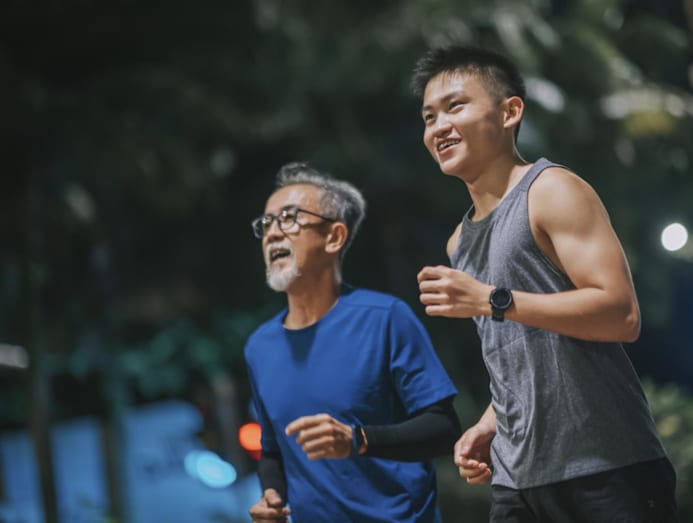
In fact, running offers a host of joint-friendly benefits. “Running strengthens the bone and muscles around the joints, improves lubrication and nutrition to the cartilage, and may reduce arthritis risk,” said Adj Assoc Prof Fareed. “Some studies have shown that recreational runners have a lower rate of hip and knee arthritis than sedentary non-runners.”
                                                                                                          (Photo: iStock/Edwin Tan)
Can you still run if you have knee pain? Have it assessed first, suggested Adj Assoc Prof Fareed, especially if the pain regularly recurs. After the cause of your joint pain has been evaluated, discuss with your doctor the pros and cons of running versus other exercise options, he said.

Should you avoid running or jogging if you’re overweight to minimise loading your joints? “It’s not necessary for mild or moderately overweight individuals to avoid running,” said Adj Assoc Prof Fareed. “Running can help with fitness and weight loss, which benefits the joints. But if running is painful for your joints, substitute it with low-impact options like brisk walking, cycling, swimming or cross-training that can provide low-impact cardio training for weight loss.”

Start slow, build gradually, and run on soft surfaces such as the stadium tracks, advised Adj Assoc Prof Fareed.

As for braces for the knees, ankles, wrists and elbows, for example, Dr Chen highlighted that they’re not a one-size-fits-all solution. “A brace may provide temporary support, especially after injury or with mild instability, but long-term reliance without strengthening the muscles can weaken joint support.”

Be discerning of soft-soled or cushioned running shoes, too. While such shoes can reduce joint impact for some, “overly soft soles may alter movement and cause other issues”, cautioned Dr Chen. “The best footwear choice depends on your foot type, activity and joint condition, which are ideally assessed by an orthopaedic or sports medicine professional.”

SHOULD YOU TRY GLUCOSAMINE SUPPLEMENTS?


The jury is still out on this one, according to both experts. “Some patients notice less discomfort and better mobility; others see no change,” said Dr Chen. Moreover, “any benefit is usually modest and more likely in mild to moderate osteoarthritis than advanced cases”.

One thing's for certain: Glucosamine supplements are not a cure or prevention for arthritis, said Adj Assoc Prof Fareed. “It won’t rebuild cartilage. It doesn’t work for everyone. Benefits, if any, are mild.”

And it applies to the various forms of glucosamine such as glucosamine sulphate, glucosamine hydrochloride and N-acetyl glucosamine. “All the add-on ingredients may not make a difference,” said Adj Assoc Prof Fareed.

But if you’re keen to give the supplement a shot, “glucosamine sulphate has the strongest support in orthopaedic literature for knee osteoarthritis”, said Dr Chen, “though benefits are modest and not guaranteed”.

As for the dosage and duration, “many studies use about 1,500mg daily, with any improvement often taking several weeks to appear”, said Adj Assoc Prof Fareed. “I do not routinely prescribe glucosamine but if the patient requests, a three-month trial is harmless. If no benefit is noticed, the patient can stop after that.”

https://cnalifestyle.channelnewsasia.com/wellness/joint-cracking-arthritis-glucosamine-running-470226

Sunday, 9 June 2024

Biking Associated With Less Knee Pain and Arthritis Later in Life, Study Finds

From prevention.com

Experts explain the science behind the findings 

  • Biking is associated with less knee pain and arthritis, according to a recent study.
  • Researchers found that the more time a person spent bicycling in their lifetime, the less likely they were to have knee pain and signs of osteoarthritis later in life.
  • Physical therapists explain what exercise may be best for your knees.

As we age, it’s essential to incorporate exercises that are low impact and easy on joints, especially if you struggle with arthritis pain. New research shows that a particular workout may help prevent knee pain and arthritis altogether: biking.

A study published in Medicine & Science in Sports & Exercise looked at how bicycling over a lifetime impacts knee pain and arthritis. This was a retrospective study within the Osteoarthritis Initiative (OAI), where researchers investigated over 2,600 OAI participants in their 60s with complete data on bicycling, knee pain, and x-ray evidence of knee osteoarthritis.

Participants filled out a self-administered questionnaire to classify bicycling during four time periods throughout a participant’s lifetime (ages 12-18, 19-34, 35-49, and > 50 years old). They researchers used this information to evaluate the effect of prior bicycling (any history of biking, history for each time period, number of periods cycling) on three outcomes at the 48-month OAI visit. The three outcomes were frequent knee pain, x-ray evidence of osteoarthritis, and symptomatic osteoarthritis.

Results showed that people who biked at any point in their lives were 17% less likely to develop knee pain, and 21% less likely to develop arthritis with pain in the knee joint, than those who did not. Even more, researchers found that the more time people spent biking, the less likely they were to have knee pain and signs of osteoarthritis later in life. The study also suggests that the exercise may help build muscle around the knees without jarring the joints—which could happen with activities like running.

So, how may biking specifically prevent knee pain and arthritis? Since it is a low-impact activity, it puts less stress on the knee joints compared to high-impact exercises like running, says Alex Aksanov, P.T., D.P.T., M.H.S., founder of Stay Active Physical Therapy. “This helps avoid wear and tear on the knee joints,” he explains. Biking also promotes joint mobility by keeping the knee joint moving throughout its full range of motion, which helps maintain flexibility and prevent stiffness often associated with arthritis, Aksanov points out.

Additionally, biking aids in the circulation of synovial fluid within the knee joint, says Aksanov. “Synovial fluid lubricates the joint, reducing friction and providing essential nutrients to the cartilage, which helps in preventing the degeneration associated with arthritis.” Lastly, Aksanov notes that the rhythmic and low-impact nature of biking can help nourish the cartilage by promoting the flow of nutrients and oxygen. “This helps in maintaining the health of the cartilage, which is crucial for joint health,” he explains.

Biking also strengthens the muscles around the knees, particularly the quadriceps, hamstrings, and calf muscles, says Aksanov. “Stronger muscles help stabilize and support the knee joint, reducing the risk of injury and easing the strain on the joints.” Aksanov continues: “The resistance encountered while pedalling, whether from the bike’s gears or terrain, provides a consistent workload for the muscles. This resistance forces the muscles to work harder and leads to muscle hypertrophy and growth over time.”

But, the muscle-building powers of bicycling are only as impactful as how hard you’re pedalling, says Karena Wu, P.T., D.P.T., clinical director and owner of ActiveCare Physical Therapy. Biking can build muscles in the leg joint if the resistance is high enough, she explains. “If you have to push hard on the pedals and move at a specific rate (i.e. not very slow), you will contract the muscles more, which will build muscle strength around the knee joint,” she says.

When it comes to biking versus running, there’s no contest when it comes to the best exercise for your knees. Biking is low-impact, and places less stress on the joints, offering a smooth, controlled motion that maintains joint health without excessive strain, says Aksanov. “The resistance in biking can be adjusted to ensure balanced muscle engagement, avoiding imbalances that might contribute to knee pain.”

In contrast, running is a high-impact activity where each stride subjects the knees to significant force, increasing the risk of knee pain and injuries such as runner’s knee, Aksanov explains. “While running strengthens knee supporting muscles and burns more calories, its repetitive impact can lead to wear and tear on knee cartilage.” Overall, biking poses a lower risk of knee injuries and promotes joint mobility and flexibility, making it a better option for individuals with knee pain, Aksanov advises.

The bottom line

This study suggests that biking, over the long term, may be associated with less breakdown and wear and tear in the knee joints, says Wu. “This has been demonstrated as less reported complaints of knee pain, less evidence of knee osteoarthritis on [x-rays], and less symptomatic arthritis on [x-rays].” These results are important for individuals to know so that they can try to avoid knee issues in the future and understand another benefit of this type of exercise, Wu explains.

Overall, the study underscores the importance of regular physical activity and suggests that incorporating bicycling into one’s routine can be a proactive measure to support long-term knee health and a reduction of osteoarthritis, Aksanov adds.

Still, while biking can be a fantastic activity for individuals to prevent knee pain and arthritis, it’s essential for individuals to listen to their bodies, start gradually, and consult a healthcare professional for personalized advice and recommendations, says Aksanov.

https://www.prevention.com/fitness/a61019556/biking-less-knee-pain-arthritis-later-in-life-study/

Wednesday, 8 May 2024

How I Run Marathons With a Rheumatoid Arthritis Diagnosis

From popsugar.com

By Laura Robinson

In December 2016, when I was 28 years old, I was nearing the end of my training cycle for my first marathon. I had just finished my peak long run of 20 miles when I started experiencing hip pain that was so severe I could hardly walk. I made an appointment to see an orthopaedic specialist, who ordered an MRI, which led to a diagnosis of a hip stress fracture.

The diagnosis meant the marathon (my hometown race, the Houston Marathon) the following month was out. Even though my injury was on my right side, the doctor noted that he saw inflammation on both sides. I didn't think anything of it at the time, though, and assumed it was just a running injury I needed to let heal before getting back to doing the thing I loved.

                                                                                                                    Courtesy of Bethany Robinson ; Capstone Photography

A few weeks later, however, my right thumb joint started to feel super sore and I started having difficulty doing everyday things like picking items up, holding things in my hand, and putting dishes away.

After talking to my twin sister, I learned she had been dealing with similar symptoms in her wrists, which she initially thought was carpal tunnel syndrome. She had had bloodwork done that showed high platelet counts, which ultimately led to a diagnosis of rheumatoid arthritis. She and my mom convinced me to also see a rheumatologist since there was a high chance of me having the same condition, seeing as we were identical twins.

The rheumatologist immediately ordered a blood panel to test for hundreds of different autoimmune disorders. The results came back showing only severe rheumatoid arthritis. The bad news didn't stop there, though — that doctor told me that if I didn't stop running and if I performed any other type of high-impact exercise, I would eventually end up in a wheelchair at some point in my life.

That was really hard to hear. I've been a runner since I was in elementary school and had still been looking forward to eventually tackling that first marathon. I left that visit in tears, which was also hard for my husband and two young sons, who were 5 and 3 years old at the time, to see.

Beginning to navigate my diagnosis was immediately challenging. Women are typically diagnosed with rheumatoid arthritis at any age between 30 and 60, but I was often much younger than any of the other patients I'd see in the waiting rooms at doctors' offices.

I'd also been prescribed five different medications, and didn't do well starting so many medications at once – it was difficult to tell what was helping and what wasn't. Still, I took them all for a year, while experiencing side effects like frequent nausea, weight loss, and hair loss. I was also nervous about the potential for more serious impacts, like stomach ulcers.

But despite the warning from that first doctor, after healing from my hip injury and getting cleared by the orthopaedic specialist — which took eight weeks, including four on crutches — I never did stop running, as it had been essential for both my mental and physical well-being for most of my life at that point, and I believed the benefits outweighed the risks. In fact, I completed my first marathon at the 2018 Houston Marathon, which is still one of my favourite racing memories to date. I finished in a time of 3:46:04, which is not too shabby for a first go at the distance.

Ultimately, the doctor's plan didn't feel tailored to me based on my individual situation, so after that first year, I decided to do some research to begin to advocate for myself. I came across studies that showed that not only can being active be beneficial for rheumatoid arthritis, it may also help with associated inflammation and pain. So I decided to see a different doctor, one who supported my desire to run and stay active, as well as my request to not be on more than two medications at once.

The road to managing my condition hasn't been completely smooth since then, though. I'm currently on a combination of two immunosuppressive drugs that reduce inflammation to help manage my symptoms: Humira, which I inject into my upper thigh once every two weeks, and methotrexate, which I take orally once per week. I also get routine blood work every three months to make sure I'm not experiencing any serious side effects from the meds.

But getting here has taken a lot of trial and error, of seeing different doctors and trying different medications. At one point, I even tried going off all medications and saw a naturopath to try alternative solutions. I tried things like going vegetarian, giving up coffee and limiting sugar, and while these dietary changes did help with my symptoms, I found they weren't sustainable for my lifestyle as an athlete.

Even with my current treatment plan, I've experienced flare-ups that have led me to have to take breaks from running, when even getting out of bed has been painful and difficult.

My condition has also posed challenges in parenting two young kids. My youngest was still a toddler when I was first diagnosed and it was sometimes hard to pick him up and carry him. As they've gotten older, I've learned to be mindful about managing my stress and fatigue levels to be able to help them with their school work and generally be present in their lives.

One of the most frustrating things about living with rheumatoid arthritis is not being able to distinguish if symptoms like stiffness or soreness may simply be aches and pains that come with being an endurance athlete, or if they're related to my condition. In any case, when I begin to experience them, I scale back and take off a day or two (or even a week, depending on the severity) to be cautious and avoid bringing on a new flare.

I've had to learn that while I can stay active, I have to listen to my body and take adequate rest and recovery. That includes between training cycles, even when I don't hit my race goals. While I may want to push myself more, I've found that my body does best with just one marathon per year, and with lower overall volume of less than 45 miles a week, in addition to regular strength and balance exercises to maintain healthy joints.

On the day-to-day, I've found that I need to adequately prepare my body and joints before every run. I do best if I run or work out in the evenings, when I've already been moving around all day, rather than shortly after waking up with stiff and achy joints. But I have training partners that I love to run with when I can, and we meet in the morning. On those days, I wake up three to four hours before we're set to work out, giving myself plenty of time to stretch, move around, and perform some activation exercises to get my joints lubricated and ready.

I have the goal to eventually qualify for the Boston Marathon, which would mean running a 3:35:00 or faster marathon for my current age group. I've completed seven marathons to date and my current personal best — 3:40:33 from the 2022 Houston Marathon — is not that far off from that standard. I'm only 35 now, and they say female runners peak in their 30s, so I'm confident I will still get it in the near future.

Living with rheumatoid arthritis as a marathoner has taught me so much about myself. It's shown me that I'm a lot stronger than I give myself credit for, which is something my husband often reminds me of when I may be feeling down about my situation. I'm always grateful to be able to just show up on a race starting line. I look at myself now and know that I'm doing everything I can to not eventually end up harming my health, like that first doctor implied I would. In fact, I'm confident that by putting myself, my fitness, and my overall well-being first, I'm contributing to a better quality of life in the long-term.

— As told to Emilia Benton


Emilia Benton is a freelance health and wellness journalist who is particularly passionate about sharing diverse stories and elevating underrepresented voices. In addition to PS, her work has been published by Runner's World, Women's Health, Self, Outside, and the Houston Chronicle, among others. Emilia is also a 13-time marathoner and a USATF Level 1-certified run coach.

https://www.popsugar.com/health/rheumatoid-arthritis-running-essay-49360310 

Wednesday, 8 November 2023

Is Running Bad for Your Knees?

From health.clevelandclinic.org

Running doesn’t cause knee arthritis, but you can take steps to minimise cartilage damage 

Running is one of the most affordable and convenient forms of exercise. But as you’re running (on a track at the gym, around your neighbourhood, on a trail in the park, on a treadmill at home), you may wonder if you’re damaging your joints. All that impact and motion — will it lead to arthritis in your knees?

Not exactly.

“Running is certainly a load-bearing sport that impacts your body. But it’s a bit of a myth that it’s bad for your joints. There’s little evidence that running causes knee arthritis,” says sports medicine physician Anne Rex, DO.

Dr. Rex says running isn’t inherently bad for your knees — but it does affect them. She explains and offers tips for protecting your joints.


How does running affect your knees?

“Running causes changes to the cartilage and fluids in your knees,” says Dr. Rex. “But these changes are temporary. Cartilage can recover from those changes in between runs, and your body adapts to running over time.”

Bottom line: Running does not cause arthritis, and when you rest, your body — and your knees — recover from the effects of running. A recent study backs this up. In a large survey of marathon runners, researchers found that running more did not raise their risk of arthritis.

Running may even lower your risk of arthritis. As your knees compress when you run, more fluid travels to your joints to keep them lubricated. That means running may benefit your joints (in addition to improving your health).

Dr. Rex emphasizes the many benefits of running. “Running is great cardiovascular exercise. It’s convenient because you don’t need any equipment except a good pair of running shoes. You can open your front door and just go.”

But where you run can make a difference in your joint health. Dr. Rex discusses the potential benefits and risks of different running terrains.

Does the running surface matter?

“The type of surface you run on does matter because it changes the impact on your body,” notes Dr. Rex.

Think about bouncing a golf ball on different surfaces. The ball bounces differently depending on how hard the surface is. The same is true for your joints. The harder the surface, the more impact on your joints. Softer terrain means less impact.

A cushy woodland trail might seem best but has potential problems. Although softer, cushioned terrain, like grass or dirt trails, offers a gentler run that reduces impact, you need to be careful of uneven ground, slippery spots and objects you could trip over.

“We know that running-related injuries increase the risk of arthritis and joint damage,” she adds.

Is running on a treadmill bad for your knees?

No, a treadmill isn’t bad for your knees. A treadmill is pretty easy on your joints because it’s flat, cushioned and free of obstacles.

“A treadmill can be great because you can run when the weather is bad or you don’t have access to a good outdoor route,” says Dr. Rex. “You can also control your pace and incline. But treadmills can be boring because there’s no change of scenery.”

She also cautions that if you’re training for a race, a treadmill isn’t a good choice. It’s best to train on the surface you’ll be racing on so your body can get used to it.

Is running on concrete bad for your knees?

“Asphalt and concrete are solid and predictable. And these surfaces are everywhere, so they’re convenient,” says Dr. Rex. “But they’re very hard, which means more impact on your joints and possible injury due to those forces.”

She advises building more rest time between runs on very hard surfaces, allowing your knee cartilage to recover. “Someone who’s younger may be able to run consecutive days on concrete and not feel pain,” she continues. “But someone who’s older or has arthritis may find they need more rest days.”

Is running every day bad for your knees?

“It really depends on you and the condition of your joints and body,” she clarifies. Running every day isn’t bad if your joints are healthy and you’re not trying to push through injuries. Always listen to your body rather than forcing yourself to stick to a strict running schedule.

How to protect your knees while running

Whether you’re training for a marathon or just getting started with running, take steps to give your knees some extra love.

Dr. Rex suggests six tips:

1. Wear the right shoes

Running shoes are the most important piece of equipment for protecting your bones and joints. Your shoes act as shock absorbers for your body, but they wear out over time and lose their ability to absorb the impact of running.

“I usually tell people to replace their running shoes every 300 to 500 miles,” she says. “It’s also important to pick the right type of shoe. I recommend going to a running specialty store to get expert help.”

2. Rest and recover between runs

“Runners with arthritis require a longer recovery time to allow for knee cartilage recovery,” Dr. Rex states. So, if you already have arthritis and you’re not taking enough rest time between runs, you could be setting yourself up for more joint pain and damage.

Even if you’re in great condition, uninjured and free of arthritis, rest days help prevent problems down the road. Also, make sure to get plenty of sleep — that’s when your body makes repairs.

3. Try knee braces

“For people with knee arthritis, I recommend trying some lightweight knee braces,” says Dr. Rex. “Braces may allow you to tolerate more running and even decrease the time needed to recover between runs.”

A sports medicine physician or physical therapist can help you find the right type of knee brace.

4. Don’t go too hard, too fast

To help avoid injuries, don’t increase your mileage or intensity too quickly. Dr. Rex recommends limiting distance and duration increases to no more than 10% per week.

She also cautions against transitioning from treadmill to outdoor running too quickly. Go slowly and give your body time to adjust to different surfaces.

5. Fuel your body well

“You need to give your body the right nutrition to perform exercise such as running,” emphasizes Dr. Rex. “If you’re a serious runner, I highly recommend working with a sports nutritionist to make sure you’re getting enough calories and nutrients to help your body and joints recover.”

6. Focus on flexibility and strength

Working on your flexibility and strength can help prevent injuries. But if you do get injured, don’t just rest.

“Ideally, you should be working with a sports medicine specialist to correct whatever caused the injury,” says Dr. Rex. “That may mean correcting a muscle weakness, reducing muscle tightness or working on your form.”

She also recommends cross-training to balance out your running routine. “Try strength trainingyoga or other activities on your rest days.” These activities may also help you reduce your risk of arthritis. And try exercises and stretches to ease knee pain (runner’s knee).

Take steps to prevent injuries and avoid falls. And care for your body when you’re not running. This way, you’ll be able to keep logging miles for years to come.

https://health.clevelandclinic.org/is-running-bad-for-your-knees/

Monday, 3 July 2023

Should I worry about running damaging my knees?

From theguardian.com

Is it true that pounding the pavement causes arthritis? Does it matter what kind of shoes you wear or what surface you run on?

When you run, every step you take can land with a force equal to almost four times your body weight. Run a mile, and you’re taking 1,500 steps like that. Sure, we’re all born to run, and perhaps even evolutionarily adapted to chase skittish deer across miles of open plain. But our ancestors weren’t running on concrete and the average hunter was probably carrying less weight than the typical London Marathon first-timer. So if you take up running – or have been doing it for decades – are you setting yourself up for creaking knees and other niggles in old age?

Just in case this is as far as you read, the answer is no, probably not. Performance coach Joseph Lightfoot says: “Lots of studies show that runners have lower instances of knee osteoarthritis than sedentary people. There are also papers which show that runners report less knee pain than sedentary people, and being a runner is linked to reduced disability in later life. Overall, the message from the research is that running is a good thing.”

To understand why this is the case, it helps to have a handle on the current scientific thinking around osteoarthritis. Chances are, you’re still thinking of this condition – the most common form of arthritis in the UK – as something associated with your knees wearing out over time, a process that endless pavement pounding would probably exacerbate. Now, it’s better understood as a disease of the entire joint, including bone, cartilage, ligaments, fat and tissue. And here, running can be protective, rather than dangerous.

recent meta-analysis, for instance, found that changes to cartilage in the knee joint after running are temporary, and some researchers suggest that running might actually condition cartilage, leading to better overall knee health. Other studies suggest that runners are less likely to develop osteoarthritis and have a lower rate of hip replacements, in part due to their lower BMI.

Some studies suggest that running may actually protect the joints rather than leading to injuries. Photograph: Eadweard Muybridge /Science & Society Picture Library/Getty Images

Of course, this doesn’t make your precious knees invincible: knee injuries are still one of the most common afflictions among runners. “Obviously there are various other factors to consider,” says Lightfoot. “Body weight, running technique, shoes and so on all come into play, but the biggest mistake most people make early on is going too hard, too fast. If you’re out of shape, start with walking, then brisk walking, then intermittent jogging and walking, then longer periods of steady jogging. Be patient.”

You can also mitigate your risk of issues caused by imbalances elsewhere in the body, for instance the hips, by including some strength and balance work alongside your regular running. “There’s plenty you can do at home with no equipment,” says Lightfoot. “For instance, a single-legged Romanian deadlift and a reverse lunge will strengthen your quads, hips and hamstrings, while core work like planks and dead bugs will help prep the body for running.”

He recommends using balance work to prepare the feet and ankles. “Balance on one leg with a slight leg bend, starting with both eyes open, then progressing to eyes closed. You can even add the challenge of playing catch with a tennis ball while standing so you’re not completely focused on balance – keep your eyes open for that, though.”

What about shoes? Well, this is where things get controversial: more than one study suggests that highly cushioned running shoes do little to mitigate injury risk, and some research suggests that they hurt rather than help. By cushioning your feet, the theory goes, they enable you to run with bad form – for instance, landing on your heels rather than your shock-absorbing toes – meaning that, counterintuitively, minimal footwear may actually help.

More generally, checking up on your form may be a good idea: modern running shoes let us run in an “over-striding” style that we’re not evolutionarily well adapted to, even though our knees can handle a fair bit of up-and-down bouncing. This means that taking more steps a minute may help, by stopping us from exerting too much horizontal “braking force” on our knees.

And what about changing the surface you run on? Perhaps not surprisingly, there are few studies on runners who stick exclusively to one surface over another, but running on grass certainly seems to reduce the forces you’re subjecting yourself to with each foot strike. It’s also worth remembering that running through greenery can improve your mood, keep you away from pollution, and even reduce your blood pressure. After all, it’s not all about your knees.

https://www.theguardian.com/lifeandstyle/2023/jul/02/should-i-worry-about-running-knees-arthritis