Showing posts with label ankle. Show all posts

Tuesday, 25 August 2026

Next-gen ankle implants to help young arthritis sufferers regain mobility

From sheffield.ac.uk

By Sean Barton

The next generation of ankle replacements that could restore mobility in young people suffering from a debilitating but overlooked condition, are being developed by a global team of researchers.


  • University of Sheffield researchers are leading a global effort to develop new ankle replacements for young people with ankle osteoarthritis - known as OA
  • OA hits a uniquely young, active demographic - often starting in a person’s 20s or 30s following a severe injury through exercise, sports or accidents
  • The disease is difficult to treat and can leave young people with a devastating compromise: undergo an operation that permanently locks the foot solid (fusion) or accept an artificial joint that may fail in a decade
  • Sheffield is leading a global team of scientists and engineers to develop the next generation of ankle implants that will restore mobility, remove pain and last a lifetime, in what is the EPSRC’s biggest-ever funding award to healthcare technology research

The next generation of ankle replacements that could restore mobility in young people suffering from a debilitating but overlooked condition, are being developed by a global team of researchers. 

Led by Professor Claire Brockett from University of Sheffield’s Insigneo Institute, the research is set to revolutionise treatment for ankle osteoarthritis - a degenerative joint disease that can leave young people facing decades of agonising, progressive mobility loss during their most active years of life.

Unlike knee or hip osteoarthritis, which often develop naturally with age, ankle OA is overwhelmingly post-traumatic - triggered by severe fractures or sprains. This means the majority of people with ankle OA are diagnosed at a much younger age than those who typically need a joint replacement, after sustaining injuries from exercise, sports or accidents.

Current treatments for ankle OA are limited. They range from early management of the disease through physiotherapy, specialised footwear and steroid injections to surgery when the condition worsens. However, as the ankle is a complex joint with a number of small bones and tendons surrounding it, this makes successful surgical intervention difficult to achieve. 

A lack of investment in current treatments means that even when surgeries are successful, patients are often left with chronic pain or limited movement. Consequently, both patients and surgeons tend to postpone the procedure, viewing surgery only as a last resort. 

Previous studies have found that the daily physical and mental toll of living with advanced ankle OA is so severe that it is statistically comparable to suffering from end-stage kidney failure or congestive heart failure, according to patients in the SF-36 survey that measures health-related quality of life. 

Now, an international team of scientists and engineers led by the University of Sheffield has been awarded £12 million - the biggest-ever grant awarded by the Engineering and Physical Sciences Research Council (EPSRC) for healthcare technology research - to develop next generation ankle implants that will restore mobility, reduce pain and last a lifetime. 

Professor Claire Brockett, Professor of Biomechanics at the University of Sheffield, said: “Ankle osteoarthritis leaves patients facing a painful condition and a difficult ultimatum: an ankle fusion, which eliminates pain but permanently locks the bones together and limits movement, or a traditional replacement that preserves some mobility but is typically reserved for older, lighter, or less active patients, and one in 10 will fail within 10 years.

“Our research is looking to give all patients, but particularly younger and more active people, a better option for treatment, so they can continue being active at such an important stage in their lives. We are looking to develop new implants that will last much longer and restore mobility closer to that of the natural ankle.”

The project, called Engineering Advanced Solutions for End-stage Ankle Osteoarthritis (EASE-Ankle OA), is a five year project to tackle Total Ankle Replacement (TAR). It brings together engineers, scientists and clinicians from the University of Sheffield together with researchers from the universities of Birmingham, Warwick, Leeds, Cardiff, Dartmouth College, USA and KU Leuven, Belgium.

Professor Sue Hartley, Vice-President for Research and Innovation at the University of Sheffield, said: “This is an exciting opportunity to work on a significant health problem that has been overlooked in the past. By bringing together diverse expertise, the research will have a profound impact on people's lives, not just in the UK, but globally.

“As the first large grant funded by EPSRC that focuses on the ankle, this project sets a new benchmark for the field - combining a world-leading systematic approach with a commitment to developing the next generation of research leaders to deliver life changing impacts for Total Ankle Replacements patients.”

https://sheffield.ac.uk/news/next-gen-ankle-implants-help-young-arthritis-sufferers-regain-mobility 

Sunday, 12 July 2026

Ankle Arthritis Is Linked to Diabetes Risk, Study Finds

From en.sedaily.com 

Research team led by Professor Kim Woo-sup at Konkuk University Medical Center Study of 262 ankle arthritis patients with an average age of 67 Analysis of the link between arthritis severity and physical activity levels

Leaving common ankle arthritis untreated can reduce physical activity and lead to metabolic diseases such as diabetes and cardiovascular disease, according to a new study.

Konkuk University Medical Center said on the 10th that a research team led by orthopaedic surgery Professor Kim Woo-sup analysed 262 ankle arthritis patients who visited its foot and ankle specialty clinic between June 2022 and October 2024, presenting evidence that ankle arthritis should be viewed not as an orthopaedic problem but as an issue of whole-body health.

Ankle arthritis is a condition affecting approximately 1% of the global population. About 50,000 new patients are reported each year. Although it is relatively less recognized than knee or hip arthritis, pain and gait impairment are severe due to the nature of the ankle joint, where body-weight loading is concentrated. In particular, ankle arthritis is more often caused by trauma-related fractures and ligament injuries than by degeneration. If left untreated or not treated properly in time, the joint cartilage can become damaged years later and progress into arthritis.

This study was conducted on 163 women and 99 men with an average age of 66.8. Using weight-bearing ankle X-rays, the research team divided the participants' arthritis severity into four stages based on the Takakura stage classification system. Physical activity levels were measured through the International Physical Activity Questionnaire (IPAQ-SF), divided into walking, moderate activity, and vigorous activity.

According to the analysis, the higher the arthritis severity in X-ray imaging, the more both vigorous physical activity and total activity decreased in a statistically significant manner. Notably, not a single response indicating vigorous physical activity was recorded among stage 4 patients, who correspond to end-stage ankle arthritis. Patients' age and body mass index (BMI) also showed a correlation with reduced activity. Beyond simply confirming the common notion that "people move less when their joints hurt," the study statistically confirmed the correlation between the objective severity of ankle arthritis and activity levels while controlling for major variables such as age, sex, BMI, and pain intensity. It also holds clinical significance in that it presented a hypothesis on the impact that reduced activity may have on whole-body metabolic health.

Regular physical activity not only increases insulin sensitivity but also helps control blood sugar and improve blood lipids. It is also effective in reducing chronic inflammation in the body. Conversely, when activity decreases, these protective effects disappear, potentially raising the risk of developing diabetes, hyperlipidemia, and cardiovascular disease. However, the fact that the study did not directly measure the occurrence of metabolic diseases is cited as a limitation. Additional long-term follow-up studies are needed to establish a causal relationship.

Currently, the treatment of ankle arthritis is focused on reducing pain. In the early stages, the goal is to reduce pain and maintain joint function through conservative treatments such as medication, injection therapy, and wearing braces. When deformity or joint damage has progressed, surgical treatments such as osteotomy, arthrodesis, and total ankle replacement are considered by comprehensively taking into account lower-limb alignment, the degree of joint deformity, and the patient's activity level and age. This study contains a clinical recommendation that treatment goals should extend beyond pain reduction to the recovery of activity.

"This is a study showing that ankle arthritis is not simply a matter of ankle pain but can be linked to reduced physical activity," Professor Kim Woo-sup stressed. "For ankle arthritis patients, a treatment strategy that not only controls pain but also maintains and restores activity is important." He added, "When ankle arthritis progresses, patients cannot move due to pain, and as activity decreases, their whole-body health can also be negatively affected," and "receiving accurate diagnosis and treatment early on helps reduce pain and maintain activity."

The study was published in a recent issue of the international journal PLOS One.

https://en.sedaily.com/culture/2026/07/12/ankle-arthritis-linked-to-diabetes-risk-study-finds

Saturday, 20 December 2025

Lesser-Known Remedy For Ankle Arthritis

From miragenews.com

Patient pain-free and mobile again after total ankle replacement by UConn Health's Dr. Lauren Geaney

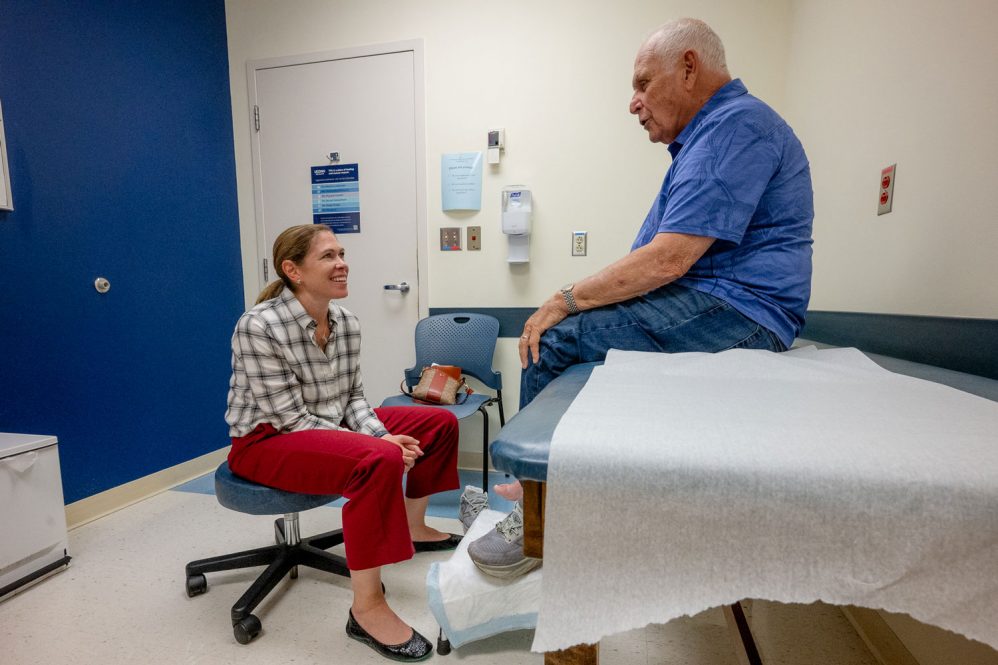
physician and patient talking in exam room

Dr. Lauren Geaney, UConn Health foot and ankle surgeon, sees Joe Marinello for a follow-up appointment six months after performing a total ankle replacement on his right foot. (Tina Encarnacion/ UConn Health photo)

A somewhat uncommon procedure is proving to be an effective solution for problems associated with ankle arthritis.

When pain becomes persistent and mobility becomes limited, an ankle fusion will address the pain. But some patients are candidates for an ankle replacement, which comes with added benefits.

"It allows patients to maintain their range of motion, and gait is better with the ankle replacement," says Dr. Lauren Geaney, UConn Health foot and ankle surgeon. "But a lot of people aren't aware total ankle replacement exists as a really great option to help pain and restore function in patients suffering from ankle arthritis."

At this time last year, Joe Marinello, of Wethersfield, was struggling with pain in his right ankle that had progressed to the point where he had a bad limp and was using a cane.

"I had pain most of the time when I moved, so my mobility was very limited, and I just didn't do a lot of things," Marinello says. "I took a lot of ibuprofen and whatever to deal with the pain, and a lot of the pressure of doing things, like shopping and doing other stuff, was put on my wife."

Marinello, 86, says the problem went back to a bad day on the baseball field in 1961, when he was playing third base for Marietta (Ohio) College.

"I slid into home and my bottom spike caught home plate, flipped me over," he says. "I busted my ankle, and actually the foot was 90 degrees and the tibia bone was on top."

He says a doctor at a bone clinic in Parkersburg, West Virgina, reset the bones in his foot without surgery.

"He had to set it at a certain angle so that everything stayed together," Marinello says. "It was a little crooked at first, but through therapy, the muscles straightened out. I broke it in May, and went into the service in September. And instead of me doing all the marching, I had to do the running, but then I went to the infirmary, and by February I was playing baseball for the squadron."

Being an athlete his whole life, it took until about 10 years ago for the decades of running to finally take their toll. He started seeing Geaney, who started him on cortisone shots. They would provide about three months of relief, but as the years went by, they lost their effectiveness.

"Ankle arthritis is much less common than hip and knee arthritis, and ankle replacement is a newer procedure," Geaney says. "The technology and our knowledge of ankle replacements even in the last 10 years since I've been in practice has grown exponentially. When I first started, I was doing about one a year, primarily because we didn't know as much about who did well. Now I'm doing about one a month or so."

Initially concerned about downtime and recovery, Marinello came around on the idea of ankle replacement surgery.

For the first 11 days after the surgery on March 20, his foot was in a splint and he was under doctor's orders to not put any weight on it. He went back to get the stitches removed and graduated to a walking boot with limited weight bearing.

"I could put it down, but I had to put pressure around my walker, I had to stay with the walker," Marinello says. "Then on April 28, she looked at it, and said, 'Put your shoe on.'

"I have had no pain since she did the surgery. I had swelling from the surgery, but I had no pain. It was incredible."

"I think he had an excellent outcome," Geaney says. "This is a great surgery to restore patients to low-impact activity like walking, hiking, biking, or swimming."

That is, after staying off the repaired foot for a few weeks, followed by rehabilitation. Geaney says it can take up to a year for full recovery.

Marinello's course of physical and occupational therapy lasted four months, at which point he reported, "The only thing she doesn't want me to do is run, and I haven't run in years, and she doesn't want me to climb a ladder. Other than that, I get my boat, I go fishing, I shop with my wife now, I help her, I carry stuff. I'm living pretty much a normal life based on my age. But to this day, I can't believe I'm walking with no pain. I'm mobile. I walk straight. There's no limp and there's no pain."

And he developed quite a fondness for his surgeon.

"To me she walks on water, because she's got me walking with no pain," Marinello says. "I talk to her like I'm talking to a friend. She's so personable and down to earth, it's incredible."

https://www.miragenews.com/lesser-known-remedy-for-ankle-arthritis-1593981/


Sunday, 25 May 2025

Walk this way: Valley surgeon weighs in on living with ankle arthritis

From fhtimes.com

By Steven Tocci, DPM | HonorHealth Orthopedics 

Ankle arthritis is more common than many folks realize. I see it every week in my practice, and I’ve watched how it can slow people down, causing pain, stiffness and making simple things like walking a real challenge. The Centers for Disease Control and Prevention says over 53 million adults in the U.S. are living with some form of arthritis. A good number of them are dealing specifically with problems in their ankles.

Ankle arthritis can progress for a few different reasons. Most commonly it is caused by past injuries — also known as post-traumatic arthritis. It can also be due to conditions such as rheumatoid arthritis, chronic gouty arthritis or the wear-and-tear kind, like osteoarthritis.

Starting with conservative treatments

If you’re just starting to deal with ankle arthritis, know this: Surgery isn’t the first step. There are plenty of ways to ease your symptoms and improve your function without going under the knife.

Here’s what that can look like:

• Oral anti-inflammatories: Over-the-counter NSAIDs like ibuprofen or naproxen can take the edge off the pain and calm down inflammation, but it’s best to take these under the guidance of your doctor to avoid any unwanted side effects. There are also prescription NSAIDs available if these do not improve symptoms.
• Cortisone injections: For those who can’t, or prefer not to take oral medications, a cortisone injection into the joint can bring significant relief. It’s a strong anti-inflammatory, and it does have long-term limitations; however, can drastically reduce pain and prolong potential surgery.
• Bracing: Sometimes, a little extra support goes a long way. An ankle brace can help stabilize the joint and cut down on pain. There are basic versions you can buy over the counter, or you might benefit from a custom brace that’s tailored to your foot and ankle.

Steven Tocci, DPM
Steven Tocci, DPM
Submitted photo
 If you’re just starting to deal with ankle arthritis, know this: Surgery isn’t the first step. There are plenty of ways to ease your symptoms and improve your function without going under the knife.”

When it’s time to consider surgery

If those conservative methods stop working, we start talking about surgical options. I’ve seen surgery give people their lives back — but it’s always a decision we make carefully and together.

• Ankle fusion (arthrodesis): This is a tried-and-true procedure. It involves removing the damaged cartilage and joining the bones so they don’t move anymore. Yes, you give up motion in that joint, but in return, you get stability and resolution of pain. Most people can walk comfortably again — and with little to no limp.
• Ankle replacement: This is a bit more complex. We take out the damaged joint and replace it with a prosthetic. The big benefit here is that you keep your ankle’s range of motion and preserve the surrounding joints. It’s not the right fit for everyone, but when it is, it can make a huge difference in staying active and mobile.

You’re not alone in this

Living with ankle arthritis can feel frustrating. Some days are harder than others. But I want to stress this — there are effective treatments out there. I’ve walked this journey with many patients, and I’ve seen how the right care can lead to a better, more comfortable life.

Managing arthritis is a process. Some steps are slow, some feel like setbacks — but each one is part of the path toward better health. Keep asking questions. Keep moving. And above all, keep hope close. You don’t have to face this alone, and you don’t have to give up doing what you love.

https://www.fhtimes.com/stories/walk-this-way-valley-surgeon-weighs-in-on-living-with-ankle-arthritis,586167

Wednesday, 10 April 2024

Causes of Leg Pain and How You Can Find Relief

From health.com

By Taneia Surles, MPH

Leg pain can be an irritating side effect of many different injuries or conditions. More common sources of leg pain include muscle cramps, injury, blood clots, and certain medical conditions that can cause general pain and discomfort. Leg pain can be acute (temporary) or chronic (ongoing).

Depending on the cause, leg pain may be a minor issue you can treat at home or can indicate a more serious health problem affecting your ability to complete daily activities. For example, in more serious cases, leg pain may be a sign of nerve damage, osteomyelitis (bone infection), joint inflammation, or other medical conditions. 

If you’re experiencing severe or recurring leg pain, it's important to know the causes and seek medical attention if necessary.

Parts of the Leg

Your leg is comprised of many different parts, including bones, muscles, joints, tendons, ligaments, cartilage, and nerves. Any of these structures can be injured or otherwise affected by a medical condition, so it’s important to be aware of what they are and where you’re feeling pain.

Your thigh, which is the upper half your leg, contains your quadricep, hamstring, abductor, and adductor muscles. Your thigh also contains the largest and strongest bone in your body: the femur.

The lower half of your leg is made up of your shin, calf, and ankle. Your shin, or the front half of your lower leg, contains a bone called the tibia. Your calf is the back part of your lower leg. It contains the gastrocnemius and soleus muscles, which come together to form your Achilles tendon. This tendon connects your calf muscles to your heel bone. The ankle joint connects your leg to your foot.

Your knee joint is in the middle of your upper and lower legs. Your knee joint connects your femur, tibia, and patella (which is more commonly known as the kneecap). Ligaments, tendons, and cartilage help support and stabilize your knee joint.

How Leg Pain Presents

                                                                        ME 3645 STUDIO / GETTY IMAGES


Several factors help differentiate between the many types of leg pain.

Understanding the following characteristics can help you determine what may be causing your pain:

  • Location: Pain may occur in one specific area of your leg or the entire leg.
  • Time of onset: Leg pain can occur due to normal wear and tear on your limbs or overuse, as well as from injuries or health conditions. More sudden pain can more often be attributed to an injury, whereas pain that sets in over time may be due to wear and tear or overuse.
  • Type of pain: There are several types of leg pain, including nociceptive (tissue damage), neuropathic (nerve), and inflammatory (joint and muscle) pain. Each type presents with unique symptoms.
  • Pattern: Your leg pain may be ongoing, sporadic, acute (sudden and intense), or a mixture.
  • Sensation: The affected area of your leg may ache, cramp, feel hot, be tender to the touch, or feel heavier than usual.
  • Intensity: Leg pain can range from mild to severe, potentially even impacting your ability to complete daily activities.

Potential Causes of Leg Pain

Pain in one or both legs can occur due to many causes, including overuse, wear and tear, injuries, certain medications, and various health conditions.

Muscle Cramps

Muscle cramps are a common cause of leg pain. You can experience ongoing, involuntary, and painful muscle contractions or cramps within single or multiple muscle fibres within your leg. These can last for a few seconds or up to several minutes.

Possible risk factors for muscle cramps include:

  • Dehydration
  • Muscle fatigue, which is especially common during physical activity
  • Imbalance of electrolytes
  • Compression of nerve roots (the first part of a nerve) or arterial blood vessels (which carry blood from your heart to your other organs) 
  • Use of certain medicines, including diuretics, beta-blockers, and statins
  • Hormonal and metabolic disorders

Injuries 

Acute or chronic injuries are another common cause of leg pain. These injuries can cause symptoms like sudden and severe pain (if acute), swelling, bruising, and the inability to move your joint normally. Risk factors for acute leg injuries include playing sports, running, falling, or having an accident. Chronic injuries are more likely to occur when acute injuries aren’t treated properly or cause complications.

The most common acute injuries leading to leg pain include:

  • Strain or sprain
  • Stress fracture
  • Tendinitis
  • Shin splints
  • Joint dislocation

Peripheral Artery Disease (PAD)

Peripheral artery disease (PAD) is a condition that can cause pain in the legs due to a narrowing or blockage of the blood vessels that carry blood from your heart to your legs. The primary cause of PAD is plaque build-up in the arteries, known as atherosclerosis.

Aside from atherosclerosis, other risk factors for PAD include:

  • Smoking
  • Having hypertension (high blood pressure)
  • Having diabetes
  • Being older than 60

PAD signs and symptoms may include the following:

  • Leg pain, aching, a feeling of heaviness in the leg, and/or cramping
  • Leg hair and toenails may stop growing
  • Foot or leg becomes pale, discoloured, or blue
  • Weakness or numbness in the legs
  • The feeling of pins and needles in your leg or foot
  • Limb ischemia (severe pain while leg and foot are resting)
  • Sores or wounds on your toes, feet, or legs that heal slowly or never heal

Blood Clot (Deep Vein Thrombosis, or DVT)

Leg pain may also result from a blood clot, also known as deep vein thrombosis (DVT). Two to 5% of people will develop DVT in their lifetime. Blood clots more often form within the leg's deep veins but can also develop in the arms.

DVT can develop from:

  • Reduced blood flow
  • An increase in venous (vein) pressure 
  • Injury to the vein from trauma, surgery, catheters, previous history of DVT, or intravenous (IV) drug use 
  • Having obesity
  • Being pregnant
  • Being older than 60
  • Hospital admission for critical care
  • Having cancer

Symptoms of DVT include pain, swelling, redness, and warmth on one or both legs. DVT is a life-threatening medical emergency and always requires urgent medical care.

Osteomyelitis (Bone Infection)

Osteomyelitis, or a bone infection, is one of the more serious conditions that can cause leg pain. This medical condition can cause acute or chronic inflammation of your bones and surrounding structures.

Potential risk factors for osteomyelitis include:

  • Diabetes 
  • A weak immune system 
  • Use of intravenous drugs
  • Bacteremia (bacteria in the blood)
  • Endocarditis (inflammation of the inner lining of the heart’s chambers and valves)
  • Injuries or other physical trauma
  • Open fractures (fractured bone is exposed to the outside environment)

Symptoms of a bone infection may include:

  • Erythema (skin redness)
  • Swelling
  • Dull pain with or without moving limbs 
  • Warmth in the affected area
  • Fever or chills

Joint Inflammation 

Joint inflammation, also known as arthritis, can be a possible cause of leg pain. Various types of arthritis can affect the lower extremities, such as the legs, hips, knees, and ankles. 

Common arthritis symptoms include pain, redness, heat, or joint swelling.  In addition, one form of arthritis, osteoarthritis, can lead to leg length discrepancy, or LLD. LLD is a common condition that causes uneven and excessive force applied to knee and hip joints and parts of the spine.

The risk factors for arthritis include:

  • Older age
  • Being assigned female at birth
  • Having obesity
  • History of diabetes, cancer, or cardiovascular disease
  • Walking disability 

Nerve Damage

Nerve damage, or peripheral neuropathy, is a common health condition in which the nerves in your legs don’t function properly due to damage to an individual or multiple nerves. There are several types of nerve damage and causes, but the most common risk factor is diabetes. Over time, having consistently high blood sugar levels can damage your nerves.

A few other risk factors for peripheral neuropathy include:

  • Chronic conditions, such as rheumatoid arthritis and lupus
  • Infections such as Lyme disease, shingles, hepatitis B and C, and diphtheria
  • Low levels of B vitamins (e.g., B1, B2, B12)
  • Heavy metal poisoning such as lead or mercury poisoning
  • Nerve trauma
  • Long-term, heavy alcohol use

Varicose Veins

Varicose veins, or varicosities, are veins underneath your skin that become swollen or twisted. Varicosities typically develop in the legs but can also occur in the rectum and scrotum.

Symptoms of varicose veins in the legs include the following:

  • Bluish, bulging veins
  • Discomfort around the affected veins
  • Changes in skin colour around the veins
  • Swelling
  • Aches and pain
  • A feeling of heaviness in the legs and feet
  • Night-time cramps

There are many potential causes and risk factors of varicose veins, including:

  • Being of an older age
  • Being assigned female at birth
  • Occupations that require constant or frequent standing
  • Pregnancy
  • Family history of varicose veins
  • Smoking
  • Having obesity
  • Low physical activity levels
  • Genetics
  • High blood pressure
  • Lifestyle habits (i.e., sitting or standing for long periods) 

Less Common Causes 

Less common causes of leg pain include:

  • Cellulitis: Cellulitis is a common bacterial infection that can cause swelling, pain, and redness in the affected area of your skin. It more commonly affects the legs or feet, but can affect other areas of your body.
  • Cancerous bone tumours: Tumours may metastasize (spread) from the original affected area to other body parts, such as the legs.
  • Legg-Calve-Perthes disease (LCP): This is a rare bone disorder that affects one or both hips in children between the ages of 3 and 10.
  • Osteoid osteoma: Osteoid osteoma is a benign or noncancerous bone tumour that can cause severe pain at night. It typically develops in the long bones of the body, such as the thigh and shin bones.
  • Sciatica: Sciatica is a condition that causes severe pain along the path of the sciatic nerve, the largest nerve in your body. It can cause a pins and needles feeling.
  • Slipped capital femoral epiphysis (SCFE): SCFE is a relatively common hip condition that occurs due to a shift at the upper part of the thighbone or femur, leading to a weakened hip joint. This condition is prevalent among teens and pre-teens.

When To See a Healthcare Provider

In some instances, your leg pain may go away on its own. However, depending on the cause of the pain, you may need to seek immediate medical attention to prevent further health complications.

If you have any of the following signs and symptoms, visit a healthcare provider for further evaluation and diagnosis:

  • You have severe pain alongside swelling, bruising, or skin discoloration.
  • You have pain and swelling that does not disappear after a few days.
  • You are trying at-home treatments, such as rest and ice, but they are not improving symptoms.
  • You are unable to tolerate any weight on your affected leg.
  • Your pain worsens when you exercise and improves when you rest.
  • You notice a visible deformity or other physical change to the affected area of your leg.

Depending on your symptoms, your primary care provider may refer you to a variety of specialty doctors. For example, if they think it’s an injury, they may refer you to an orthopaedist (a medical doctor who focuses on the musculoskeletal system).

How Is Leg Pain Diagnosed?

Before receiving treatment, your healthcare provider may ask questions about your leg pain and recommend certain diagnostic tests.

Common diagnostic exams and tests for leg pain include:

  • Cardiac examination involving pulse and blood pressure: This is a physical examination that checks for signs of endocarditis and other heart concerns.
  • Head and neck examination: This is a physical examination in which a healthcare provider inspects you for signs of head and neck injuries or related conditions.
  • Abdominal examination: A healthcare provider examines the shape of your abdomen, looking for any changes in your skin, abdominal masses, and movement of the abdominal wall as you breathe in and out.
  • Peripheral pulse and extremity exam: This assesses your pulse to determine if you have an irregular heartbeat, which can be an indicator of peripheral artery disease.
  • Non-invasive arterial examination: This examination reviews the blood vessels that support major organs and tissues to detect any underlying problems.
  • Computed tomographic angiography (CTA): This non-invasive test uses X-rays to take images of your heart and blood vessels. A computer then combines the images to create a three-dimensional (3D) image of your heart.
  • Magnetic resonance imaging (MRI): An MRI is a non-invasive scan that creates detailed pictures of the area of your body being examined. This makes it easier for your healthcare provider to spot any issues in areas like your bones and muscles.
  • Magnetic resonance angiography (MRA): This non-invasive test generates images of your arteries to see if any abnormalities (such as build-up) could be contributing to a blood clot.

How Is Leg Pain Treated?

If your leg pain isn’t severe, you may be able to treat it with at-home remedies. Depending on the cause, medical intervention may be needed.

At-Home Treatments

If you have acute leg pain from muscle cramps or overuse, you can the rest, ice, compression, and elevation (RICE) method before resorting to medical care, if necessary. Here are some recommendations:

  • Rest: Try to limit or avoid activities that can worsen your leg pain
  • Ice therapy: Apply ice to the affected area for up to 15 minutes four times daily
  • Compression: Bandage the affected area to reduce swelling and inflammation
  • Elevate your leg: Use a pillow or two to elevate your leg to reduce or prevent swelling
  • Stretches and massages: Gently stretch and massage your leg muscles to relieve cramps
  • Over-the-counter medications: Take non-steroidal anti-inflammatory drugs (NSAIDs) such as Tylenol (acetaminophen) or Advil (ibuprofen) for pain relief

Medical Treatments

For more serious or chronic leg pain, your healthcare provider may suggest one of the following medical treatments to relieve your symptoms:

  • Prescription medications: Leg pain due to nerve damage, heart or blood conditions, or arthritis may require prescription drugs.
  • Immobilisation: This common treatment method uses movement prevention to encourage blood flow in the affected area. Splints, braces, and casts can support and protect a leg injury.
  • Physical therapy: If you have an acute injury, rehabilitation may be necessary before resuming your daily activities. A physical therapist can teach you exercises to rebuild your strength and improve your range of motion. 
  • Surgery: In some instances, surgery may be necessary to repair connective tissues, bone fractures, or damaged nerves. 

A Quick Review

There are many reasons why you might experience leg pain. The most common causes are muscle cramps, injuries, blood clots, and various medical conditions. Leg pain can vary depending on factors such as location, symptoms, severity, and other factors.

If you’re dealing with chronic or long-term pain in one or both legs, visit your healthcare provider to get a diagnosis and start treatment so you can resume your daily activities as soon as possible.

FREQUENTLY ASKED QUESTIONS

  • What diseases start with leg pain?

    Leg pain can be the first sign of medical conditions like peripheral artery disease (PAD), deep vein thrombosis, osteomyelitis, arthritis, nerve damage, or varicose veins.

  • What is fibromyalgia leg pain like?

    One of the main symptoms of fibromyalgia is chronic pain, which many people describe as aching, burning, or throbbing sensations in the legs or other limbs.

  • How do I know if my leg pain is vascular or muscular?

    The difference between vascular and muscular leg pain is that vascular pain is pain that worsens during movement and eases when you rest, while muscular pain, or myalgia, starts during and right after movement.

  • https://www.health.com/leg-pain-8624401