From cihr-irsc.gc.ca
“Most people don’t know that kids get arthritis,” says Dr. Deborah Marshall. “And they don’t understand the serious and wide-ranging effects of arthritis on child patients, their families, and communities.”
Dr. Marshall, Svare Chair, Health Economics, Value and Impact at the University of Calgary, studies the social and economic burden of juvenile arthritis and gathers data and evidence to influence health decision-making.
“In our research program, we are focused on standardizing measurements of care, measuring treatment preferences, and modelling the cost-effectiveness of personalized treatment strategies,” says Dr. Marshall. “Overall, we’re building a pathway to impact for better health and well-being for children and families.”

Arthritis is one of the most common inflammatory diseases in childhood. It affects around 25,000 children in Canada. In juvenile arthritis, the immune system attacks the joints, causing pain, swelling, inflammation, and in many cases irreversible damage and long-term disability. The disease can have debilitating effects in all areas of a child‘s life.
The good news is that in the last decade a variety of treatment options have become available for children with arthritis. The gap is knowing which treatment will work optimally in each case.
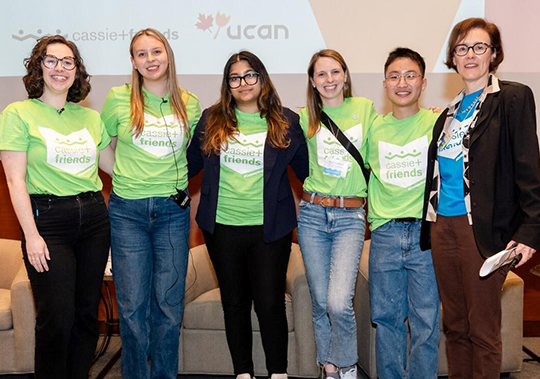
Dr. Marshall is the health economics lead for the successful national and international Understanding Childhood Arthritis Network (UCAN) collaboration. Through this collaboration, Dr. Marshall and her colleagues and partners are advancing science, generating knowledge, and have created a highly effective data collection and sharing ecosystem.
“It doesn’t sound very sexy, but we need to measure things,” says Dr. Marshall. “We need to be able to measure the outcomes and socioeconomic burden for patients—and we need data to tell our impact story and drive actionable change.”
Children with arthritis have a variety of treatment options. In Canada, treatments usually start with steroids, then move to a class of drugs named disease-modifying anti-rheumatic drugs, or DMARDS, and finally to biologics, which are expensive and may not be accessible, depending on where you live in the country. It can take a couple of years of trying different drugs before finding one that works best for the patient.
“It’s difficult to believe, that in the 21st century, we still use trial and error to arrive at the right drug,” says Dr. Rae Yeung, a paediatric rheumatologist, leader of the UCAN research program, and Scientific Director of the CIHR Institute of Musculoskeletal Health and Arthritis.
“With UCAN’s comprehensive data strategy, we can answer questions using data from multiple domains, including demographic, clinical, biologic, socioeconomic and patient reported outcomes. This wholistic approach allows us to develop personalized treatment plans for patients and may lead to cost savings for the health system and families.”
Most studies on juvenile arthritis have focused on medical costs. But what is often hidden are the significant social and economic costs for patients and their families. They include missing school and social activities, having to reduce work hours, and paying out-of-pocket for medications, physical therapy, and travel to see arthritis specialists in other cities.
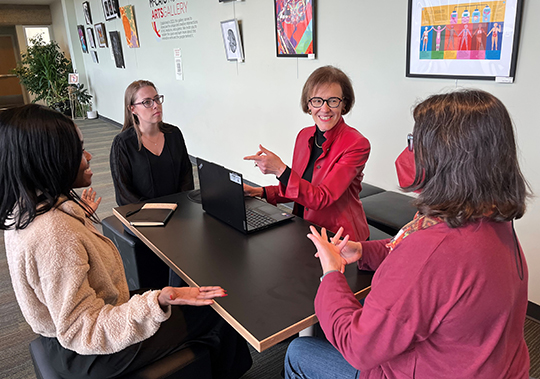
“It’s heartbreaking to listen to patients and parents talk about the effect of arthritis on their lives,” says Dr. Marshall.
Listening to patients motivated Dr. Marshall and her team to develop research training opportunities and empower patients and their families.
Dr. Marshall is one of the founders of the Patient and Community Engagement Research (PaCER) program at the University of Calgary where participants learn how to design and implement qualitative research studies. A group of youth with arthritis who took the PaCER program conducted a study that filled an evidence gap on the experience of youth with arthritis in the transition from paediatric to adult care in Canada.
An international project led by Canada called PAVE (Producing an Arthritis Value-Framework with Economic Evidence) will develop an evidence-informed, patient and parent co-created framework that will fully capture all the ways that childhood arthritis affects families. Dr. Marshall is collaborating on PAVE with Cassie and Friends, a juvenile arthritis charity, which is the lead patient organization for the consortium.
The strong leadership of Dr. Marshall and her outstanding contributions to programs such as UCAN, PaCER, PAVE, and others helped secure the funding for One Child Every Child, a Canada-first research and translation initiative, which is supported by a major grant from the Canada First Research Excellence Fund.
Dr. Marshall also leads the value, impact and knowledge mobilization accelerator of One Child Every Child, which embeds value and impact measures into research activities to achieve maximum impact by design. With their destination clearly in mind, the team is well on the road to creating a healthier future for children in Canada and globally.


